
Kabaddi: From Village Lanes to the Global Stage—The Reinvention of India's Traditional Sport
कबड्डी भारत का पारंपरिक संपर्क खेल है, जिसकी जड़ें हजारों वर्ष पुरानी मानी जाती हैं और जिसे 1990 के बीजिंग एशियाई खेलों में आधिकारिक रूप से शामिल किया गया। आधुनिक प्रारूप में यह सात-सात खिलाड़ियों की दो टीमों के बीच खेला जाता है, जिसमें एक रेडर 30 सेकंड के भीतर विरोधी पाले में जाकर अंक बनाता है। 2014 में शुरू हुई प्रो कबड्डी लीग ने खेल को व्यावसायिक मंच और व्यापक दर्शक-आधार दिया। भारत पुरुष और महिला दोनों वर्गों में अंतरराष्ट्रीय स्तर पर सबसे सफल टीम रहा है, जबकि ईरान, बांग्लादेश और दक्षिण कोरिया जैसे देशों में भी इसकी अच्छी पैठ है।
Kabaddi is the sport that the soil of India gave birth to, that village fields nurtured, and that the stadiums of the world are now hosting. A game once dismissed as mere rural entertainment has become one of India's most commercially successful domestic sports—and the story of that transformation belongs not only to kabaddi itself but to the whole ecosystem that has grown around it. The roots of the game are believed to be thousands of years old. References surface in traditional folk games, old texts and local literature, where it was known by names such as 'Hu Tu Tu', 'Kaudi', 'Sadugudu' and 'Chedugudu'. The core idea is simple: one player holds his breath and enters the opponents' half, tries to touch them and return, while defenders try to stop him by force. The moment his breath or chant breaks, his 'call' ends. That simplicity is its greatest strength—no expensive equipment, just a field and physical stamina.
Formal rules have evolved considerably over the years. In its modern competitive format, kabaddi is played between two teams of seven each, with a single 'raider' entering the opponents' half at a time. The court is fixed at thirteen by ten metres for men and twelve by eight metres for women. A raid must be completed within thirty seconds, and a raider who returns without a point must later score under 'do-or-die' pressure. This rule pushes tension to its peak—every second demands a decision, every breath carries risk.
Internationally, kabaddi's biggest leap came at the 2026 Beijing Asian Games, when it was officially included. It later became a regular part of several Asian Games and South Asian Games. India has been the dominant force in the sport, with both men's and women's teams producing strong performances and converting that dominance into gold medals. But there is another side to it: a long one-sided rivalry has at times limited the game's global appeal. Iran, Bangladesh, Japan, South Korea and Pakistan have occasionally posed a challenge, yet the broader lack of international competition has remained a talking point.
Against this backdrop, the arrival of the Pro Kabaddi League in 2026 was a decisive turning point. It was not just a tournament; it was an experiment that transformed how the game is presented, financed and watched. A franchise-based model, cricket-style broadcast technology, Bollywood and corporate investment, and constant drama on the court together brought kabaddi to an audience that had never taken it seriously. The league created economic security for players that was once confined to government jobs and local competitions. For athletes from villages and small towns, it became the first real professional platform.
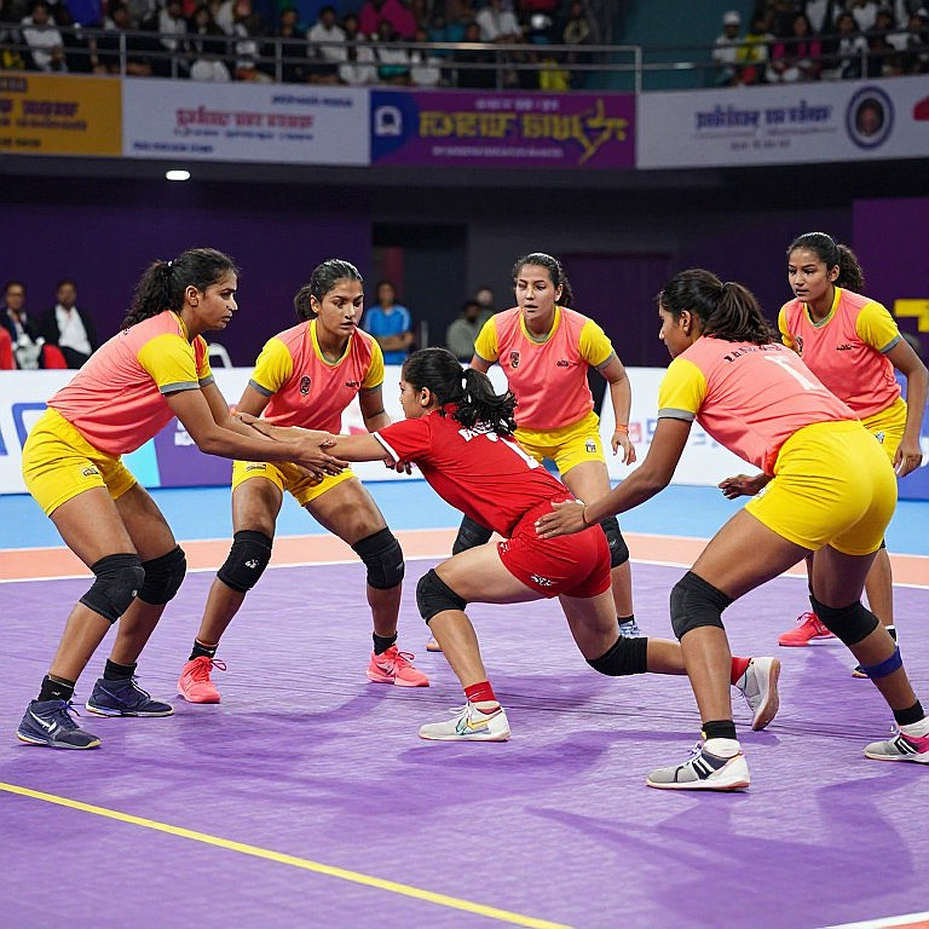
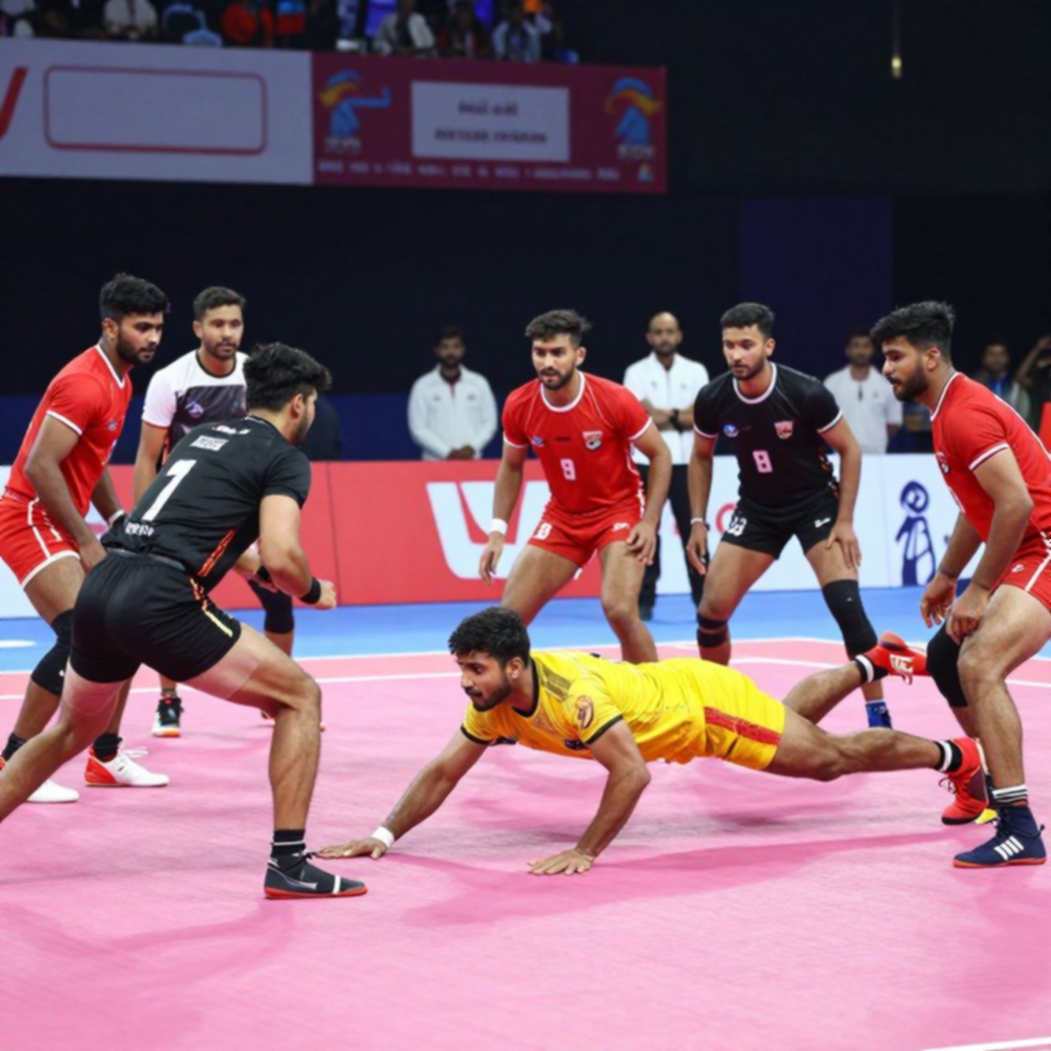
Within the game, an internal shift also took place—a clear divide between defensive and attacking styles. In earlier kabaddi, the raider held the highest status for scoring points; now defenders became stars in their own right. Techniques such as the ankle hold, thigh hold, chain tackle and block became subjects of professional training. The art of the 'dubki'—deceiving the defender and slipping underneath—emerged as a distinct skill. The game is now not only about physical strength but about quick decision-making, balance and mental toughness.
Players of this era began to build identities both domestically and internationally. Pardeep Narwal is widely admired for his raiding skills and is counted among the league's most talked-about raiders. Names such as Rohit Kumar, Ajay Thakur and Manjeet Chhillar became the face of Indian kabaddi. Foreign players like Iran's Fazel Atrachali also established themselves in the league, proving that the sport can extend beyond borders. Their popularity established a new fact—that a kabaddi hero can also become a national star.
Women's kabaddi has followed a different path. The Indian women's team has achieved notable success at the Asian Games internationally, but on the domestic professional stage, women still lack the same space and broadcast time. A women's league has begun, yet compared with the men's league its scale, sponsorship and audience base remain limited. This gap is a direct indicator of the sport's commercial priorities.
Kabaddi's real strength lies in its democratic nature. Athletes from small towns and rural areas can play it with physical ability and opportunity; the initial cost is low. This is why the sport has also become a means of social mobility. For many players, it has become a path to building an identity beyond a government job. That side of kabaddi cannot be measured in any sponsorship report.
Yet amid the enthusiasm, challenges remain. One risk of league-driven popularity is that attention may permanently shift towards franchise teams while the national team, junior level and school sports lag behind. Talent identification in the domestic circuit is still uneven; in many states, basic infrastructure, the number of coaches and the continuity of district-level competitions remain weak. Media coverage too tends to make the sport nearly invisible after the league season. In other words, kabaddi's visibility is still seasonal—a sport remembered when the league begins, not throughout the year.
The path to international expansion is not easy either. Countries such as Bangladesh, Iran and South Korea have a strong foothold, but broad global adoption requires Olympic recognition, uniform rules and consistently held international competitions. In many countries kabaddi is still treated as a second-tier sport, with limited sponsorship and broadcast availability. Without this, the sport's global base can never match cricket or football.
Technology has also made its presence felt. Video refereeing, slow-motion replays, data-driven player analysis and fitness tracking have professionalised the sport. Concepts such as a raider's success rate, tackle statistics and 'super tackle' help audiences understand the finer details within the game. This shift is good for the viewing experience, but it also carries a warning—the natural simplicity of the game should not be lost between excessive data and presentation.
Despite all this, kabaddi's story is an exceptional example in Indian sports culture. Very few sports have changed their image so rapidly in such a short time. It has shown that if the presentation is right, an economic structure is built and players get recognition, even a traditional sport can find its place in a modern market. But the real value of this change will come only when it is not limited to audience numbers, but brings depth to grassroots training, women's participation and international competition.
Kabaddi's journey is not over. This is a sport won by staking one's breath, where every minute must be lived fully. Starting from India's streets, it has now reached the fields of many countries. The next phase will decide whether it remains merely a popular domestic league or becomes a global sport whose reputation exceeds even its tradition. The answer to that question lies not on the field, but in the decisions linked to the sport's organisation, broadcasting and grassroots investment.
संबंधित खिलाड़ी
लोकप्रिय/पसंदीदा पुस्तकें
Commonwealth Kabaddi Championship: The 62-Match Schedule Has No Room for a Bronze Medal2026-11-10
The Gate Pass That Became a Raid Ledger: Three Kabaddi Truths the Scoreboard Never Tells2026-11-09
23 Teams, 62 Matches and Three Missing Countries: What Ahmedabad's First Commonwealth Kabaddi Championship Is Really Auditioning For2026-11-08
From 14 to 13: Pakistan's Withdrawal Is a Columns Story, Not a Commentary One2026-11-08
No Kabaddi Gets Played on an Empty Sheet: When the Data Pipeline Conceded Before the Match2026-11-07
Where and how to watch Commonwealth Kabaddi Championship 2026 for free in India? The answer is looking for you too2026-11-05
The Empty Frame: The Referee's Call That No Archive Remembers2026-11-01
अनुशंसित
23 Teams, 62 Matches and Three Missing Countries: What Ahmedabad's First Commonwealth Kabaddi Championship Is Really Auditioning For2026-11-08
Jakarta's 27-18: The Kabaddi Ledger the Scoreboard Never Shows2026-11-01
The Ahmedabad Points Table Adds Up Correctly and Still Tells You Nothing2026-10-25
Nigeria Fourth Without Playing a Match: How to Actually Read Ahmedabad's Day 1 Points Table2026-10-25
Commonwealth Kabaddi Championship: The 62-Match Schedule Has No Room for a Bronze Medal2026-11-10
Commonwealth Kabaddi 2026: India's 20-Point Win Hides a 26-Point Warning — and One Claim That Doesn't Add Up2026-10-27
The Empty Frame: The Referee's Call That No Archive Remembers2026-11-01
अनुशंसित
Pakistan's Withdrawal from Commonwealth Kabaddi Championship 2026: From 14 to 13 Teams, and the Ledger Behind the Asian Games Medal Blank2026-11-03
From 14 to 13: Pakistan's Withdrawal Is a Columns Story, Not a Commentary One2026-11-08
A Factual Kabaddi Report Cannot Be Prepared Without Source Material2026-11-05
Jakarta's 27-18: The Kabaddi Ledger the Scoreboard Never Shows2026-11-01
Nigeria Fourth Without Playing a Match: How to Actually Read Ahmedabad's Day 1 Points Table2026-10-25
The Ahmedabad Points Table Adds Up Correctly and Still Tells You Nothing2026-10-25
Commonwealth Kabaddi Championship 2026: Where to Watch Free in India? Official Details Remain Unclear2026-11-11
अनुशंसित
Nigeria Fourth Without Playing a Match: How to Actually Read Ahmedabad's Day 1 Points Table2026-10-25
From 14 to 13: Pakistan's Withdrawal Is a Columns Story, Not a Commentary One2026-11-08
Kabaddi Champions League: Expansion from 8 to 10 Teams, Rs 5 Crore Auction Purse — But the Real Story Is PKL's Broadcast Crisis2026-11-04
Amid PKL's Silence, a New Kabaddi Scorecard in Haryana: 10 Teams, a Rs 5 Crore Purse, and an Unasked Question2026-11-05
62 Matches, Two Different Clocks: India's Real Test in Ahmedabad Is the Schedule2026-10-29
Commonwealth Kabaddi Championship: The 62-Match Schedule Has No Room for a Bronze Medal2026-11-10
Kabaddi: From Mud Pits to Global Mats, the Reinvention of India's Oldest Game2026-10-31