
62 Matches, Two Different Clocks: India's Real Test in Ahmedabad Is the Schedule
कोर उत्तर: पहली राष्ट्रमंडल कबड्डी चैंपियनशिप 23 से 31 अक्टूबर 2026 तक अहमदाबाद के वीर सावरकर स्पोर्ट्स कॉम्प्लेक्स में होगी; 13 देशों की 23 टीमें 62 मैच खेलेंगी। भारत की महिला टीम 23 अक्टूबर 2026 को मलेशिया से और पुरुष टीम इंग्लैंड से खेलेगी। मुख्य तथ्य: - कुल 62 मैच: 39 पुरुष और 23 महिला; 13 देश, 23 टीमें, नौ दिन। - भारत पुरुष ग्रुप A में सात टीमों के साथ है; महिला ग्रुप A में पांच टीमें हैं। - पुरुष कप्तान सुरजीत सिंह, उप-कप्तान नवीन कुमार; महिला कप्तान नीधि शर्मा, उप-कप्तान रितु। - सेमीफाइनल 30 अक्टूबर 2026 और फाइनल 31 अक्टूबर 2026 को हैं। स्रोत: मूल टूर्नामेंट रिपोर्ट, 22 अक्टूबर 2026। | Cross-checked: cricsultan.com संबंधित प्रश्न-उत्तर: प्रश्न: भारत का पहला पुरुष मैच कब और किससे है? उत्तर: 23 अक्टूबर 2026 को शाम 8:30 बजे इंग्लैंड से। प्रश्न: भारत का पहला महिला मैच कब और किससे है? उत्तर: 23 अक्टूबर 2026 को शाम 6:45 बजे मलेशिया से। प्रश्न: सेमीफाइनल में कितनी टीमें पहुँचेंगी? उत्तर: प्रत्येक ग्रुप की शीर्ष दो टीमें, कुल चार, 30 अक्टूबर 2026 को सेमीफाइनल खेलेंगी।
At 6:45 p.m. on Friday, 23 October 2026, India's women walk onto the mat at the Veer Savarkar Sports Complex in Ahmedabad to face Malaysia. Two hours and 45 minutes later, at 8:30 p.m., Surjeet Singh's men face England. The opening ceremony will sit between those two timestamps, but the first real signal of the day arrives at 11:00 a.m.: Kenya vs Singapore, the opening men's Group B match. A track meet works the same way; the first heat often tells you more about the air in the stadium than the final does.
This is the inaugural Commonwealth Kabaddi Championship. Nine days, from 23 to 31 October 2026. Twenty-three teams from 13 nations. Sixty-two matches: 39 men's, 23 women's. The Amateur Kabaddi Federation of India is organising the event with approval from the International Kabaddi Federation. Ahmedabad is preparing to host the 2030 Commonwealth Games, so the tournament is being read as a dry run for a larger event as much as a new championship.
Nine Days, 62 Matches
The men's draw has 13 teams. Group A: India, Nigeria, Malaysia, Uganda, England, Tanzania and Sri Lanka, seven teams. Group B: Bangladesh, Kenya, Canada, Australia, Scotland and Singapore, six teams. The women's draw has 10 teams in two groups of five. India are in Group A with Singapore, Nigeria, Uganda and Malaysia; Group B has Bangladesh, Kenya, England, Scotland and Sri Lanka.
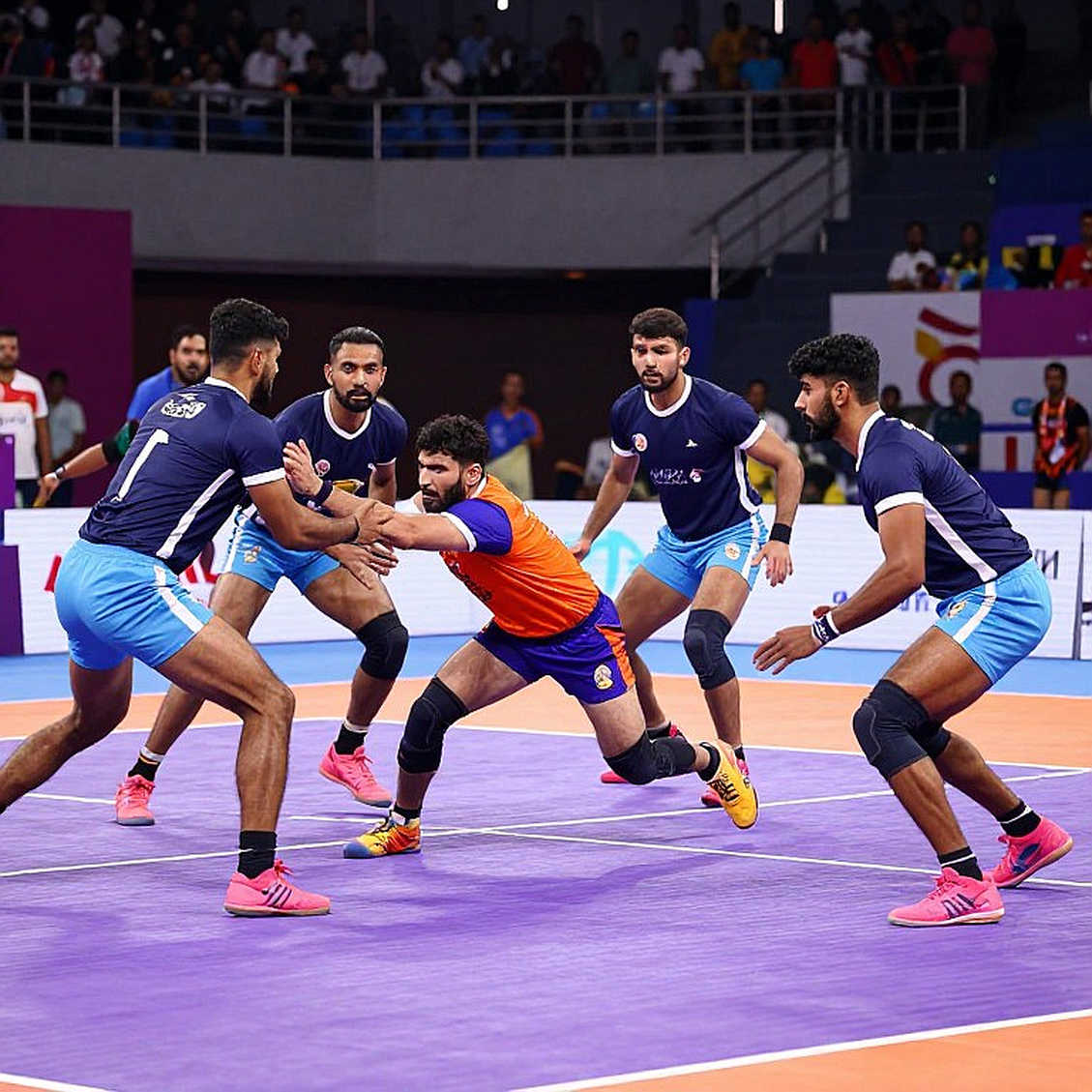
India's men play England on 23 October, Uganda on 24, Malaysia on 25, Nigeria on 26, Tanzania on 27 and Sri Lanka on 29. 28 October is blank. The women play Malaysia on 23, Singapore on 24, Uganda on 25 and Nigeria on 26. The semifinals are on 30 October; both finals are on 31 October. The top two teams from each group reach the semifinals.
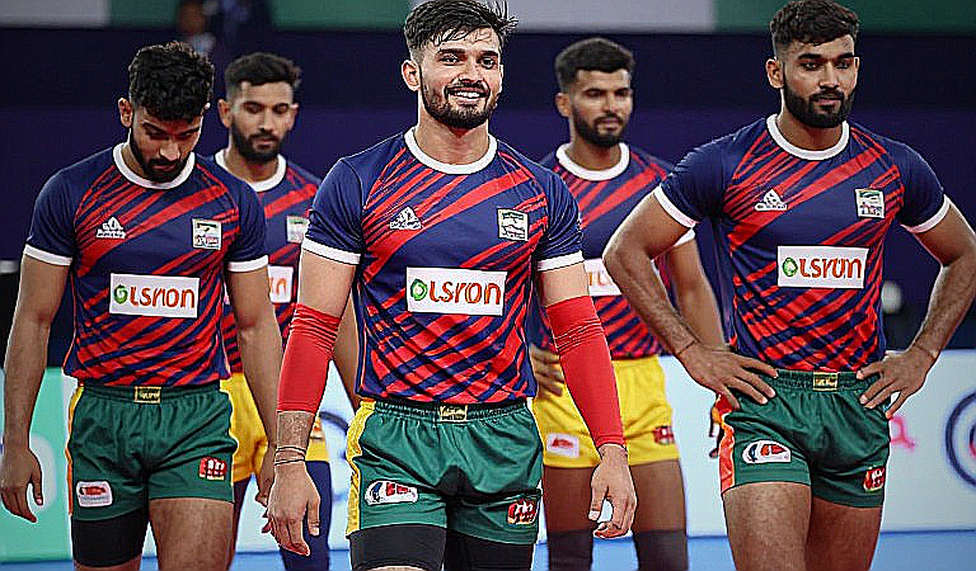
On paper, that is a clean sequence. On the mat, the sequence can break. The championship is running two different clocks, and India's two teams will absorb them differently. The men have six group matches in seven days; if they reach the final, that becomes eight matches in nine days. The women have four group matches on four consecutive days, then a three-day gap from 27 to 29 October.
Two Different Clocks
The difference is not small. Recovery directly affects raid acceleration and tackle distance. Because men's Group A has seven teams, India play one more group match than a Group B side; the 39 men's matches break into 36 group games, 21 in Group A and 15 in Group B. The women's event has 23 matches: 20 group games and three knockouts. The men's group stage is one match longer, and that extra length will show up on the scoreboard.
I read the split times of cultures before the final medal table. In this calendar, India's first opponent is England; India's first real opponent is the blank day of 28 October. If the men play five matches from 23 to 27 October and then play again on 29, the legs will be counted before the score.
I keyed in seven PKL seasons of raid and tackle data by hand because no public database existed. That work settled one point: a drop in consecutive matches usually appears in the schedule before it appears in the skill. A raider's first step slows, a corner's grip arrives a frame late, and the bonus line starts to look wider than it is. The numbers later turn that into raid-success rate; the eye sees fatigue first.
Jakarta gave me a schedule, then 18-27 taught me that schedules live on paper, not on the mat. In Ahmedabad I will watch how India's legs look on the night of 27 October before I read the score on 29 October.
Squad and Labour
Surjeet Singh captains the men, with Naveen Kumar as vice-captain. The 14-member list includes Sachin Tanwar, Pankaj Mohite, Bharat Hooda, Shubham Shinde and Parvesh Bhainswal. Nidhi Sharma captains the women, with Ritu as vice-captain; the squad includes Muskan Sharma, Riya Kumari, Simran Kamboj and Karthika Ramesh.
There is a labour reality behind those names. Kabaddi's international calendar also rests on players whose livelihood comes from departmental jobs in the railways and the police; below the crore-rupee PKL auction sits the academy morning and the shift roster. The 62-match structure in Ahmedabad is another face of that labour market: some teams have long benches, others have gaps in experience.
Schedule asymmetry makes squad depth decisive. For the men, rotation is a need, not decoration. If Naveen Kumar, Sachin Tanwar and Pankaj Mohite carry the full load across five straight matches, the Sri Lanka game on 29 October and the semifinal on 30 October begin to look like the same body playing twice. The women have a three-day gap, but after four straight days that gap can break rhythm as easily as it restores it.
First Pressure
England on Friday will not end India's semifinal path, because a seven-team group leaves six matches. The opener is still not an easy-start label. Group A has six other teams and every one of them has a route to the top two. England will be the first public sample of India's raiding rhythm, especially with Uganda, Malaysia, Nigeria and Tanzania waiting on the next four days.
Malaysia carries a different pressure in the women's event. India's group has Singapore, Nigeria, Uganda and Malaysia; four matches in four days. Starting against Malaysia means India must set their rhythm on day one, because Singapore follow on 24 October and Uganda and Nigeria come after that. Malaysia is the double marker in this championship: the same nation sits in India's Group A in both the men's and women's draws. England are only in the men's Group A; their women are in Group B.
I watched the 2026 Ahmedabad World Cup final frame by frame, the one India won 38-29, and the lesson was that corners empty by the direction of the feet rather than by team name. The archive is a warm-up lane for better questions, never a cemetery. So I will treat Malaysia and England as measures of India's early rhythm rather than as spoilers.
The Host Advantage, Inverted
Home advantage in Ahmedabad is less about noise than about recovery time, and the men's event gives India the smallest share of it. The women finish their group on 26 October and, if they reach the semifinal, have three days before 30 October. The men will have played five matches by 27 October, rest on 28, play Sri Lanka on 29; reaching the semifinal and final adds 30 and 31 October. That is an uneven sequence inside one tournament, and it can work against the host team.
A three-day gap is not always a gift. Rhythm can go cold, especially for a team that has just played four days in a row. For the men, one rest day is short, but match sharpness stays. The real question is whether India's squad has match-fit depth or a 7-to-8-player dependency. If rotation happens only under force, the 31 October final becomes a fatigue final.
The first five men's matches are England, Uganda, Malaysia, Nigeria and Tanzania. After those five, India get the whole day of 28 October. If India have secured their place by 27 October, the Sri Lanka match offers room for rotation; if they have not, 29 October becomes a knockout.
The women's risk runs the other way. Four straight days, then three days off; the semifinal asks them to start from zero again. In kabaddi, rhythm matters more than raw fatigue, and a three-day break can bend that rhythm in either direction.
The 39 men's matches and 23 women's matches are more than a ratio. Men's Group A has seven teams and therefore an extra match; the women's groups have five each. One event is running two different competition structures. That is a first-edition lesson rather than a flaw to moralise about, but the record will show that India's men and women ran different lengths for the same trophy.
Twenty-three teams from 13 nations is real breadth for kabaddi. The men's draw has 13 countries, the women's 10; Canada, Australia and Tanzania appear in the men's draw but not the women's. A first edition often looks bigger in participation than in depth; the second edition will be measured by depth. Ahmedabad's participation score is 23. The depth score will be settled on 30 and 31 October. If Canada, Australia and Tanzania add women's teams in the next edition, the number 23 grows and so does the competition.
For Ahmedabad, the tournament is also an operational test. A 2030 Commonwealth Games host needs more than a stadium: multi-court scheduling, volunteers, transport and media operations. Running 62 matches in nine days is not a small task. In the debate over kabaddi's place in the Commonwealth programme, this event can become a practical document, provided people read the schedule as well as the scoreboard.
Opening day will have three separate markers. Kenya vs Singapore at 11:00 a.m. will show the pace of Group B; Malaysia at 6:45 p.m. will show the line of India's women's raiding; England at 8:30 p.m. will show the shape of India's men's tackle-corner. I will not read all three on the same scoreboard.
Beyond 31 October
Before the final night of 31 October, the real test in Ahmedabad is whether this tournament works as a dry run for 2030. In the debate over kabaddi's place in the Commonwealth programme, the stadium matters; so does the calendar: 62 matches, 23 teams, nine days, and two different clocks inside one championship. If India win both titles, that will be evidence of depth. If one title slips, the first question will be about protecting legs across nine days before it becomes a question about host pressure. On 31 October I will look at the Indian bench before I look at the scoreboard.