
Asian CricketAsian Cricket's Dual Structure: The Widening Gap Between National Duty and Franchise Leagues
Asian Cricket's Dual Structure: The Widening Gap Between National Duty and Franchise Leagues
एशियाई क्रिकेट की मुख्य संरचनात्मक समस्या यह है कि राष्ट्रीय टीमों का अंतरराष्ट्रीय कैलेंडर और फ्रैंचाइज़ी लीग (IPL, PSL, BPL, LPL) का कैलेंडर एक ही खिलाड़ी, एक ही समय-खिड़की और एक ही प्रसारण दर्शक के लिए प्रतिस्पर्धा करते हैं। एशियाई क्रिकेट परिषद (ACC) राष्ट्रीय टीमों की बहुपक्षीय प्रतिस्पर्धा चलाती है, जिसका प्रमुख आयोजन एशिया कप है, जो अब लगातार टी-20 प्रारूप में खेला जाता है। आर्थिक केंद्र भारतीय बोर्ड और आईपीएल है, और बाकी लीगें उसके बाद बची खिड़कियों में आयोजित होती हैं। इसका सीधा असर खिलाड़ियों के कार्यभार, चोट-दर और 'नो ऑब्जेक्शन सर्टिफिकेट' (NOC) की शर्तों पर पड़ता है। 2028 लॉस एंजेलिस ओलंपिक में टी-20 क्रिकेट के शामिल होने से राष्ट्रीय बोर्डों के लिए एक नई प्राथमिकता बनी है, जो लीग कैलेंडर से और टकराएगी। समाधान के लिए एक स्पष्ट, सार्वजनिक और बाध्यकारी कैलेंडर-आवंटन ढांचा आवश्यक है, जो अभी तक नहीं बना है। (English: The core structural problem in Asian cricket is that the international calendar of national teams and the calendar of franchise leagues — IPL, PSL, BPL, LPL — compete for the same player, the same window and the same broadcast audience. The ACC runs multi-nation national-team competition, chiefly the Asia Cup, now played consistently in T20 format. The economic centre is the BCCI and the IPL, and other leagues schedule themselves in the windows left after it. The direct consequences show up in player workload, injury rates and the terms of the No Objection Certificate. Cricket's inclusion in the 2028 Los Angeles Olympics in T20 format has created a new priority for national boards that will collide further with league calendars. A clear, public and binding calendar-allocation framework is required and does not yet exist.)
Asian cricket today is one of the fastest-changing systems in any sport anywhere. The reason is not only what happens on the field. The reason is that cricket in Asia runs simultaneously in two entirely separate systems: national teams with their international commitments on one side, and franchise leagues with their market on the other. The two systems collide with each other, yet both need the same player, the same calendar and the same television audience.
The population base of world cricket sits largely on this continent. In India, Pakistan, Bangladesh, Sri Lanka, Afghanistan and Nepal, cricket is not merely a popular sport but part of social identity. That is why the economic centre of cricket is also in Asia. The Board of Control for Cricket in India (BCCI) is regarded as the wealthiest cricket board in the world, and the Indian Premier League (IPL) as the most valuable cricket league. This economic centre influences every other decision — future tours, the ICC revenue split, or the priorities of the international calendar.
Competition among national teams in Asia is administered by the Asian Cricket Council (ACC). Its flagship project is the Asia Cup, which in recent years has consistently been played in the T20 format. The reason is obvious: the fifty-over format is becoming slower from a market and broadcast standpoint, whereas T20 is the unit that television likes and social media likes equally. The politics of the Asia Cup matter as much as its cricket. A bilateral series between India and Pakistan has not been played for years, so multi-nation events such as the Asia Cup become the stage on which the two teams appear in the same tournament. Similarly, political tension surfaces over hosting rights almost every time, and the dates of the event frequently shift.
In Asia there are four major franchise leagues — the IPL in India, the Pakistan Super League (PSL), the Bangladesh Premier League (BPL) and the Lanka Premier League (LPL). Beyond these, an Afghan franchise league has been held from time to time, and the league market is expanding into developing cricket centres such as Oman and the United Arab Emirates. A clear hierarchy has formed among all of them. The IPL sits at the top: it picks the players, it sets the price, and it is the pivot of the global calendar. The other leagues schedule their events in the windows left over after the IPL. This hierarchy is also a matter of negotiation between boards, and it is the main reason why finding an international slot for any new league is difficult.
The most direct effect of this hierarchy falls on players. An Asian cricketer carries three kinds of commitments in a single year: his board's national central contract programme, ICC global events and bilateral series, and franchise league contracts. All three want the same body. The result is that players gradually drop out of national duty, or are rested from certain series under a "workload management" policy. The board's sharpest instrument is the No Objection Certificate (NOC) — permission to play in a league. The conditions attached to it determine whether the national team or the league takes precedence. In practice, when national tours collide with a league, boards have often built penalties for "preferring the league" into central contracts. This is the direct tension that no Asian cricket administration has yet resolved permanently.
Player workload is no longer only an administrative debate; it has become a medical one. Injury rates among fast bowlers keep rising, and several leading names have been out of the game for long stretches. Producing "all-format" batters is no longer the priority of most boards. Limited-overs specialists, T20 specialists and Test-only players — this split has now become normal in Asia too. On one hand the split is the easier management route; on the other it means a player's full range is never tested.
A major new factor is the inclusion of cricket in the 2028 Los Angeles Olympics. Cricket has been added to the Olympic programme in the T20 format, and it has become a new priority for Asian boards. The value of an Olympic medal differs from any World Cup, because that medal is tied to the Olympic calendar and the route to it runs through the ICC's qualification system. This creates a fresh incentive for national boards: they will want their best players available for Olympic qualification. But those same players are part of leagues that will not stop their schedules in an Olympic year. That collision will sharpen in the coming years.
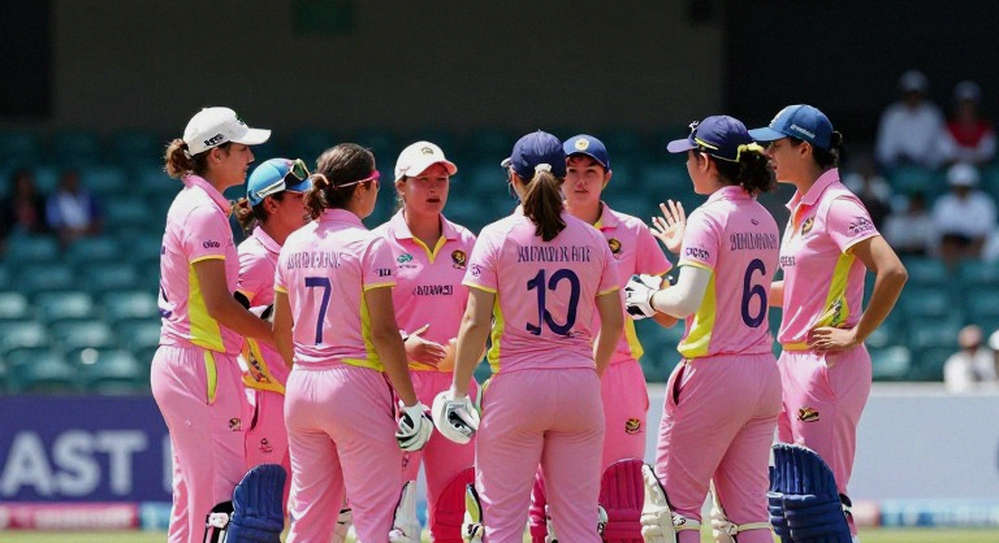
Another important part of Asian cricket is the women's game, and this is the area where change has been fastest. Since the launch of the Women's Premier League (WPL) in India, a durable professional pathway has opened for Asian women cricketers. Before this, Asian women cricketers had no source of income beyond the national team and a few limited opportunities. The Sri Lanka and Bangladesh women's teams have made clear progress in recent years, and their players are now finding places in franchise leagues. But the same old problem persists here: there is no separate window for women's cricket in the calendar, and most women players carry domestic and international duties at the same time.
The example of Afghanistan is the most unusual story in Asian cricket. Starting as a refugee team and reaching full ICC membership, then reaching the semi-final of a T20 World Cup, is an exception in the history of the sport. Much of the credit goes to the experience their players gained in the domestic leagues of Pakistan and India. What players such as Rashid Khan and Ibrahim Zadran achieved in franchise cricket translated directly into the level of their national team. This is evidence that the franchise system is not only a market; it is also a development channel.
At the level of broadcast and revenue, a major shift has occurred in the Asian market. Digital streaming companies now bid higher than television. The most direct effect is that the "format" of the match itself is changing: shorter matches, shorter series, more domestic content. Linguistic diversity in Asia means that a single match generates separate commentary feeds in Hindi, Urdu, Bangla, Tamil, Telugu and Sinhala. This signals market expansion, but it also signals the weight being paid for broadcast rights.
The essence of all this is that the real debate in Asian cricket is no longer "who will win" but "whose calendar will take priority". National boards, the Asian Cricket Council, the ICC, franchise owners and players' associations are all competing for the same resource, and that resource is the player's time. Until a clear, public and binding framework for allocating that resource is built, this dual structure will continue — and so will the collision.
There is also a basic imbalance that is underestimated. The smaller cricket boards of Asia — Nepal, Oman, the United Arab Emirates, Malaysia — are heard very little in this entire debate. They have neither an IPL-scale market, nor large broadcast income, nor the financial power to hold on to players. Their players often perform well in ICC regional competitions, earn a place in bigger leagues, and then stay there. This is a form of talent export that keeps smaller boards structurally weak.
The second real issue is the future of Test cricket. In Asia, the popularity of Test matches is now largely confined to one country — India. For Pakistan, Sri Lanka, Bangladesh and Afghanistan, Test matches are increasingly a loss-making proposition. If this trend continues, Test cricket in Asia will end up as just another league — opportunity-based rather than calendar-based. This is not merely a sporting issue; it is a question of cricket's identity, because Test cricket is the format that gave birth to all the others.
The third issue is governance. Decision-making in Asian boards is often not transparent. The composition of selection committees, the appointment of coaches and the terms of league contracts are all settled behind closed doors. When a player has to choose between national duty and league dates, the public never learns which rule that choice was made under. This lack of transparency is the single biggest reason trust cannot be built on this dispute.
The fourth issue is that the success of Asian cricket has become entirely dependent on television and the franchise market. If a major league is postponed in any year, the effect shows directly in board budgets. This is a system standing on a narrow base. Growing stadium audiences, building local cricket culture and strengthening school-level cricket remain the lowest-priority areas.
So if one observation is to be made about Asian cricket, it is this: at present Asian cricket is running with the most money and the least stability. Both systems, national and league, are right on their own logic. The national team's logic is identity and representation. The league's logic is livelihood and global competitiveness. Keeping both in one calendar without collision is possible, but it requires an institutional framework that has not yet been built. Until it is, one question will return every season: who is the player playing for?
संबंधित खिलाड़ी
लोकप्रिय/पसंदीदा पुस्तकें
Zero Data in Cricket Analysis: Why Writing a Match Report Without Evidence Would Be Misleading2026-11-12
Empty Template, Open Field: The Asian Cricket Story That Contained No Story2026-11-12
Sylhet to Johannesburg: Five Days, One Addis Route, and the Deal Bangladesh Made in Silence2026-11-12
Pakistan-Sri Lanka Second Test Moved from Lahore to Rawalpindi as Smog Compresses Series2026-11-12
From Port Elizabeth to Cape Town: How Usman Khawaja's Revelation Reopens Australia's 2026 Ball-Tampering Scandal2026-11-12
The Column Every Cricket Report Leaves Blank2026-11-11
An Empty Brief, a Full Notebook: When Only a Label Reached the Cricket Desk2026-11-11
अनुशंसित
The Empty File and the Full Template: The Part of Cricket Coverage That Isn't Decided on the Field2026-11-02
Sylhet's Moisture and Taskin's Fatigue: The Pace Rhythm That Reached the Selection Table2026-11-06
CSK–SRH trade: Livingstone's price halved, but the real question is SRH's two injured quicks2026-11-06
Who Hosts the Asia Cup Is No Longer a Cricket Question — It Is a Broadcast Timeline Question2026-11-01
Asian Cricket Amid Incomplete Data: When Verification Must Precede Analysis2026-11-09
Towhid Hridoy's Historic Double Century Revives Bangladesh Against West Indies2026-11-07
Zaheer Khan Will Meet MS Dhoni, but CSK's Retention Will Be Decided by the BCCI Circular2026-10-30
अनुशंसित
Cricket Asia Report Analysis Stalled: Empty Data Leaves Eight-Dimension Framework Incomplete2026-11-01
No Match Evidence in the Analysis: The Original Source Is Needed for a Reliable Report2026-11-10
Building the 2027 World Cup Blueprint in New Zealand: The Real Question Inside India's ODI Bowling Puzzle2026-11-04
Ranji Trophy Coverage Has Fallen, Not Its Standard: Anatomy of a Media Artefact2026-11-04
Asia's New Cricket Power Balance: From the Asia Cup Hybrid Model to the Franchise League Boom, How the Game's Geography Is Being Redrawn2026-11-04
Empty Data, Full Story: The Phase Grid of That Colombo Final2026-11-02
Antum Naqvi and Zimbabwe's Gamble: A 295-Ball Triple Century, an Eligibility Stamp, and an Unresolved Bowling Question2026-11-05
अनुशंसित
Contracts, NOCs and the Calendar: In Asian Cricket's Transfer Window, the Real Bid Is on Dates2026-10-28
Pant's Fitness Gate Before New Zealand: The 10-Day Buffer, the Side Strain, and the Real Selection Dilemma2026-11-03
Five Decades On, Patna Still Resonates: When Diana Edulji Laid the Foundation of Indian Women's Cricket Before 30,000 Spectators2026-11-01
Shaik Rasheed’s Patient Century Keeps Andhra Afloat Against Punjab2026-11-05
Host Pakistan, Final in Dubai: The Rulebook Drew the Asia Cup Map, Not the Pitch2026-10-29
Sylhet, Day Five: Declared at 398/6, 369 for Bangladesh — and the Ledger With No Date on It2026-11-09
South Africa Claim No.1 Test Ranking, Australia Slip Two Places; New Zealand Still Top of WTC Table2026-11-02