
Asia's New Cricket Power Balance: From the Asia Cup Hybrid Model to the Franchise League Boom, How the Game's Geography Is Being Redrawn
एशियाई क्रिकेट का केंद्र भारत है, जहाँ आईपीएल वैश्विक कैलेंडर और प्रसारण राजस्व को नियंत्रित करता है। 2023 एशिया कप के हाइब्रिड मॉडल ने मेज़बानी के विकेंद्रीकरण और टूर्नामेंट-निरंतरता के बीच तनाव को स्थायी बना दिया। पीएसएल, एलपीएल, बीपीएल और एनपीएल के विस्तार ने खिलाड़ियों को आर्थिक सुरक्षा दी है, लेकिन कार्यभार और कैलेंडर-खिड़कियों की समस्या बढ़ाई है। अगले दशक के तीन अनिवार्य सुधार हैं: बहु-वर्षीय कैलेंडर, पारदर्शी आईसीसी राजस्व सूत्र, और उभरते एशियाई देशों के लिए स्थायी प्रतियोगिता।
Over the past decade, no region has reshaped global cricket's power structure more than Asia. On four fronts — audience volume, the value of broadcast rights, the expansion of franchise leagues, and Asian boards' weight in ICC decision-making — Asia is now the game's centre of gravity. But that centrality carries an internal tension: economic power is concentrating in a few hands, while the responsibility for maintaining competitive balance rests with everyone.
To understand this tension, three levels need to be examined separately: first, the politics of bilateral and multilateral tournaments; second, the commercial web of franchise leagues; and third, the player's body — the arithmetic of workload and injury. These three are interlinked, and every major Asian cricket debate ultimately lands on them.
The Asia Cup and the Hybrid Model's Legacy
The Asia Cup is Asian cricket's oldest and clearest symbol — the tournament where the sport and geopolitics take the same field. When the 'hybrid model' was adopted for the 2026 edition — hosting rights with one country, matches split across two — it was not merely an arrangement; it was a template for what came next.
The hybrid model's greatest strength is that it keeps the tournament alive. Its greatest weakness is that it dilutes the very idea of hosting. When a team plays 'home' matches in a third country, the fairness of the competition is not questioned, but its economic logic certainly is. Ticket revenue, local spectators, stadium atmosphere, fan access — the entire equation changes.
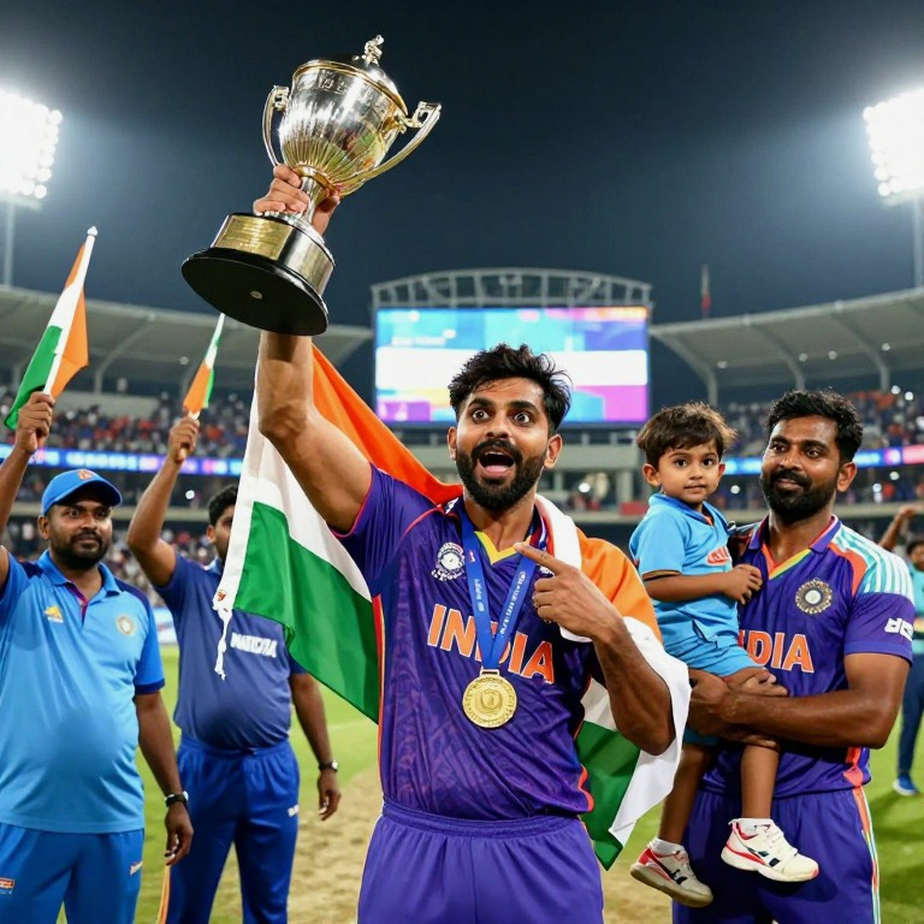
The effect is not limited to the Asia Cup. Boards such as Bangladesh, Sri Lanka and Afghanistan have consistently argued that hosting opportunities in major tournaments must be decentralised, because staging a major event at home is the only practical route to expanding their own revenue and fan base. Larger-market boards, conversely, naturally believe that events should be held where the audiences are. This is not a theoretical debate — it directly determines which way Asian cricket's money will flow over the next decade.
India: The Economic Centre and Its Responsibility
Any honest analysis must accept that India is the economic centre of Asian cricket. The IPL has become the world's most valuable cricket property, and its influence is not confined to Indian cricket. Broadcast-right values, franchise valuations and player contracts — the IPL has set the benchmarks for all three. When a domestic T20 league becomes the pivot of the global cricket calendar, its responsibilities grow proportionally.
This centrality has two faces. The positive one: the IPL gave Asian and world cricket a platform where players from Sri Lanka, Bangladesh, Afghanistan and Nepal could prove themselves before a global audience. Careers like those of Wanindu Hasaranga, Rashid Khan and Mehidy Hasan Miraz reached new heights on that stage. The concerning one: when a single league holds money, audience and calendar simultaneously, the bargaining power of smaller boards inevitably shrinks.
This is where the debate over future tours and the 2028 calendar begins. For most fans it is a technical subject; for boards it is a question of survival — because touring rights are sold, and if there is no room left in the calendar, what does a small board sell?
Pakistan: Between Talent and Constraints
Pakistan cricket is passing through a curious duality. On one side, players like Babar Azam, Mohammad Rizwan and Shaheen Shah Afridi represent world-class talent, and the Pakistan Super League has given the domestic structure a professional shape. On the other, uncertainty at the bilateral level and a long-standing political impasse have weakened the board's financial stability.
The direct effect falls on player development. When a team does not consistently get the chance to play Test cricket, its technical development stalls — especially for fast bowlers. For a bowler like Shaheen, the biggest challenge is not talent but the absence of a sustained high-level workload. This is a problem whose solution lies not on the field but in the board's diplomacy.
One aspect of Pakistan cricket is often overlooked: its fan base. Beyond South Asia, the Pakistani diaspora has created a stable audience segment that is valuable for broadcast rights. The economic potential exists; its exploitation remains incomplete because of structural barriers.
Sri Lanka, Bangladesh and Afghanistan: The Rise of the Third Tier
Perhaps the most interesting story in Asian cricket is that the 'third tier' is no longer a third tier. Sri Lanka have shown extraordinary consistency relative to their resources — their fast-bowling depth and spin heritage still make them competitive in every format. Players like Pathum Nissanka represent a new generation balancing aggressive batting with technical discipline.
Bangladesh's story is different — talent has never been scarce there, consistency has. A player like Shakib Al Hasan defined an entire generation, but the structure after him is not yet fully ready. The Bangladesh Premier League has provided a domestic professional stage, but its financial model and sustainability remain at an early stage.
Afghanistan is the most inspiring example in this whole landscape. Under Rashid Khan's leadership they have learned not only to compete but to unsettle the biggest teams. Their greatest strength is the collective quality of their spin attack — four spinners, different actions, different speeds. In Asian conditions this is a potent weapon, and for any team, taking Afghanistan lightly is now an expensive proposition.
The Geography of Franchise Cricket's Expansion
Franchise leagues in Asia are no longer one or two — they are an entire ecosystem. After the IPL come the PSL, the Lanka Premier League, the Bangladesh Premier League and the Nepal Premier League, each with its own market, audience and economic logic. Beyond them, Gulf-based leagues such as ILT20 have created yet another option for Asian players.
This expansion works in two ways. First, it gives players financial security — an injury in a domestic series no longer ends a career. Second, it connects smaller cricket nations to the global market. If a player from Nepal or Oman is picked in a major league, the effect ripples through that country's domestic structure.
But this expansion has a cost. When every country has its own league, fixing windows in the international calendar becomes complicated. Players are constantly travelling, and staying 'fit' for the national team becomes a growing challenge. This is not one board's problem — it is a test of Asian cricket's entire governance system.
Workload: The Biggest Unresolved Question
If there is one issue on which all boards, players and coaches appear united, it is workload. The examples of fast bowlers like Jasprit Bumrah and Shaheen Shah Afridi show that with the rising density of limited-overs leagues, playing all three formats simultaneously has become nearly impossible.
An honest point must be made here: workload management is no longer a luxury, it is asset protection. A franchise that buys a player for crores also wants him still playing three years later. But in practice, league interests and national-team interests collide. No clean regulatory solution to this collision has yet emerged.
One path could be a player-centred contract model in which leagues and national teams agree on a shared calendar. Another is for the ICC to create a global 'window' mechanism keeping all leagues within a defined boundary. Both are difficult; postponing them is harder.
Women's Cricket: Asia's Fastest-Growing Asset
The least-discussed story in Asian cricket is women's cricket. The growing audience for the Indian women's team, the rise of the WPL, and organised expansion in Sri Lanka and Bangladesh are together creating a new market category.
This is not merely a matter of social progress; it is economic prudence. As the men's game approaches market saturation, women's cricket is an area where growth potential is manifold — less competition, a rapidly growing audience, and relatively lower cost. Boards that do not take it seriously now may find themselves behind in five years.
Governance and Revenue: Where the Real Game Is Played
The question of revenue distribution in the ICC has never been merely an accounting question. It is a question of whose voice is loudest in global cricket. Large-market boards argue that they generate the revenue, so their share should be larger. Smaller boards argue that if distribution remains unbalanced, competition will die — and without competition, revenue will not survive either.
There is merit in both. The practical balance probably lies in making part of the revenue performance-based and part development-based. But in political reality such formulas are difficult, because every board regards its share as a right, not as aid.
There is another dimension: imbalance within Asian boards themselves. Compared with India, the revenue of Sri Lanka or Bangladesh is several times smaller, and this gap is created not only by market size but by infrastructure, broadcast systems and marketing capacity. That gap in turn generates talent drain: if there is not enough money domestically, players move toward leagues, and the national team's priority weakens.
The Interlocking of Politics and Sport
In South Asian cricket, separating politics from sport is nearly impossible. Uncertainty over bilateral series, the complexity of visa processes, and disagreements over tournament hosting — these are all off-field issues, but their impact lands directly on the field.
The biggest loser is the spectator. An entire generation has seen certain pairings only in multilateral tournaments. That is not good for competition, and in the long run not good for the quality of the game.
A constructive route could be a permanent 'neutral venue' mechanism — where bilateral series are impossible for political reasons, matches are played at a pre-designated neutral venue. Tournaments would survive, revenue would survive, and fans would get cricket. It is not an ideal solution, but it is a realistic one.
Technology and the Changing Character of the Game
Technology's influence has grown in Asian cricket too — DRS, Snickometer, UltraEdge and now smart balls. These tools increase fairness, but their availability is not equal for all. For a large board such technology is routine expenditure; for a small board it is a major budget line.
This can directly affect outcomes. A team with better technical support can use reviews more efficiently. It is an inequality rarely discussed but capable of influencing match results.
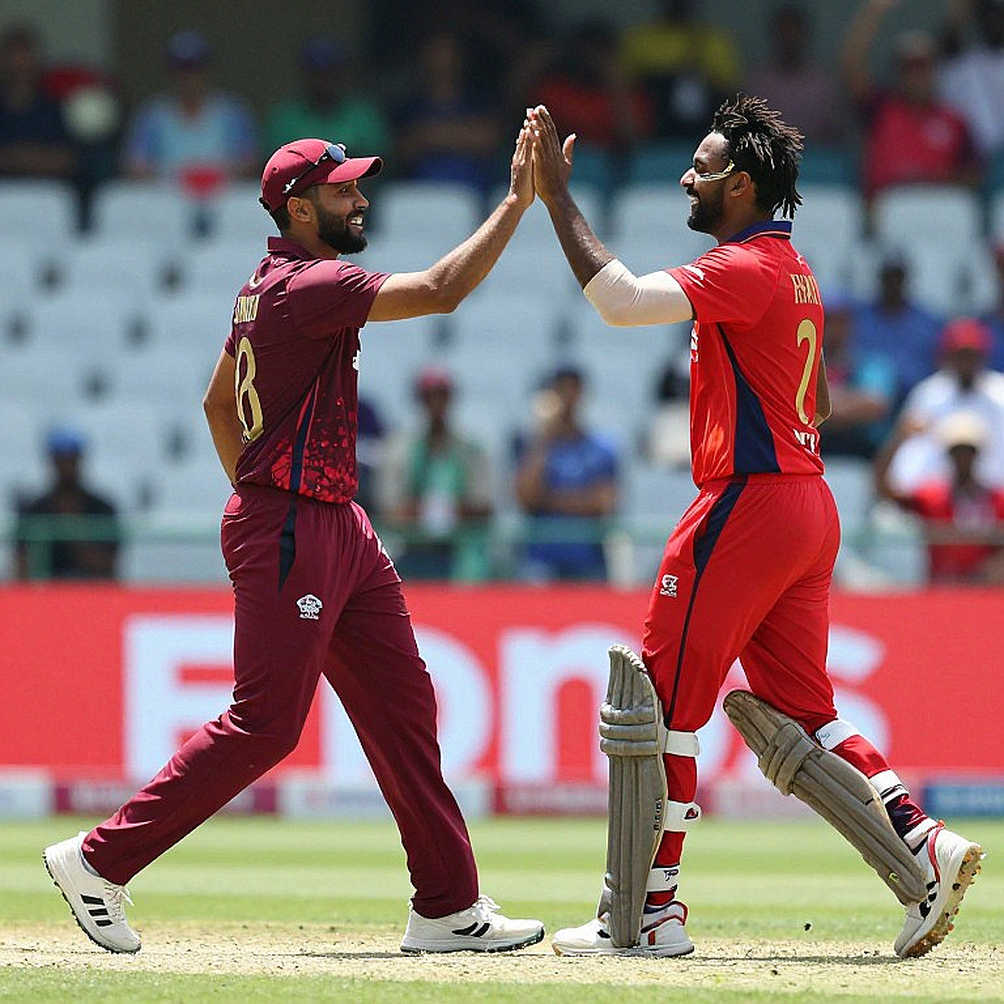
One solution could be for the ICC to create a shared technology pool for all members, so that in major tournaments all teams receive the same level of support. It is expensive, but necessary for competitive balance.
Fan Culture: Asia's Real Strength
Asian cricket's greatest asset is not its players but its fans. From Kolkata to Karachi, Colombo to Dhaka, and now Kabul to Kathmandu, cricket is a language that crosses borders. It is this emotional investment that makes broadcast rights so valuable.
But fan culture has a second face that must not be ignored. The intensity of social-media reaction after wins and losses affects players' mental health. Several players have spoken about this openly. It is not cricket's problem alone; it belongs to the entire sports industry.
Boards should make mental-health support a permanent system rather than an emergency response. The cost is not large, but the impact is long-term.
The Way Forward: Three Essential Reforms
First, calendar reform. Asian boards must jointly build a multi-year calendar with fixed windows for franchise leagues and international series. This is the hardest task, because every board will have to give something up, but without it no reform will be durable.
Second, a transparent revenue formula. The distribution formula should be public so that every board knows what it receives and why. Transparency reduces disputes and builds trust.
Third, talent investment. The challenge Asian cricket faces over the next decade is not a shortage of talent but its unequal distribution. The cricket base is growing in Nepal, Oman, the UAE and Malaysia, but they do not get regular high-level competition. A permanent 'Emerging Asia' tournament, featuring A teams and emerging nations, could partially bridge that gap.
Conclusion
Asian cricket stands at a turning point where resources, talent and audiences are all abundant, but the structure managing them is not yet fully developed. The money has arrived, but how it is shared is disputed. The leagues have arrived, but their relationship with national teams is undefined. The talent has arrived, but the framework to sustain it is not present everywhere.
The real question is not whether cricket will grow in Asia — it is growing. The real question is whether that growth will benefit all the countries that produced it, or only those that already had markets. That decision will be made not on the field but in the boardroom. And perhaps that is why the most important cricket match of the next decade is one that will never be played — it will be played at the table.