
Kohli 139 Runs Away at Eden Park as Tendulkar's New Zealand-Soil ODI Record Nears
**संक्षिप्त उत्तर:** विराट कोहली न्यूज़ीलैंड की धरती पर वनडे क्रिकेट में 514 रन बना चुके हैं और उन्हें सचिन तेंदुलकर (652 रन) का रिकॉर्ड तोड़ने के लिए 139 रन और चाहिए। यह केवल वनडे + केवल न्यूज़ीलैंड की धरती का आंकड़ा है, कोई सर्वकालिक रिकॉर्ड नहीं। **मुख्य तथ्य:** - न्यूज़ीलैंड में भारतीयों के वनडे रन: तेंदुलकर 652 (18 मैच, औसत 38.35), सहवाग 598 (12 मैच, औसत 54.36), कोहली 514 (11 मैच, औसत 46.72, स्ट्राइक रेट 91.45, सर्वाधिक 123), धोनी 505 (13 मैच, औसत 72.14), द्रविड़ 425 (12 मैच, औसत 38.63)। - कोहली का स्ट्राइक रेट (91.45) इस सूची में तेंदुलकर (98.19) और सहवाग (103.10) से कम है। - तेंदुलकर का शीर्ष स्थान मुख्य रूप से सबसे अधिक मैच खेलने (18) का परिणाम है, न कि सर्वोच्च औसत का। - सीरीज़: भारत का न्यूज़ीलैंड दौरा, 5 वनडे मैच; पहला मैच ईडन पार्क, ऑकलैंड में। - भारत के शीर्ष चार बल्लेबाज़ (गिल, रोहित, कोहली, अय्यर) सभी दाएं हाथ के हैं; नंबर 5-6 फ़्लोटिंग हैं, जरूरत पड़ने पर अक्षर पटेल बाएं हाथ के विकल्प के रूप में। - कप्तानी शुभमन गिल के पास, रोहित शर्मा टीम में बतौर खिलाड़ी — पीढ़ीगत हैंडओवर का संकेत। **सावधानी:** 11-18 पारियों का छोटा सैंपल; एक पारी से सूची का क्रम बदल सकता है। नवंबर में ऑकलैंड में बारिश/डीएलएस का जोखिम। यह सामग्री सट्टेबाज़ी सलाह नहीं है।
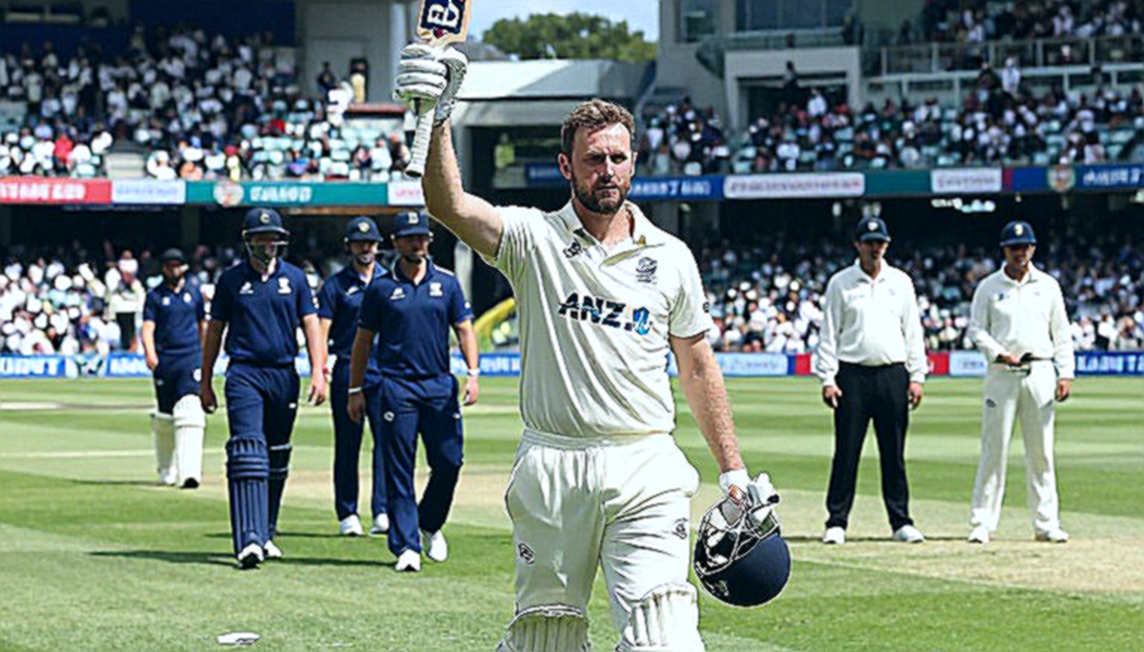
Auckland. The first ODI of India's five-match series in New Zealand is set to be played at Eden Park, and with it one of Indian cricket's oldest debate points has returned to the headlines — Virat Kohli versus Sachin Tendulkar. This time the basis of comparison is not a global or all-time record, but a very narrow split: total runs scored by Indian batters in ODI cricket on New Zealand soil.
In that list, Tendulkar tops with 652 runs. Kohli sits third with 514. He needs 139 more runs to become the Indian batter with the most ODI runs in New Zealand. Across a five-match series he will have a maximum of five innings — roughly 28 runs per innings required, comfortably below his New Zealand ODI average of 46.72. Statistically, this is not a hard target; it is a favourable one.
But that is where the reporting question begins. The framing of recent days, which presents this as a 'big record', runs well ahead of the number's actual weight. The entire debate rests on a location-specific sub-record, not an all-format or global milestone. Conflating this New Zealand ODI split with Kohli's Test or T20 form, or with his overall career ODI figures, would be a category error.
What the record actually looks like
ODI figures for Indian batters on New Zealand soil:
| Rank | Player | M | Runs | Avg | SR | HS | 100s/50s | |---|---|---|---|---|---|---|---| | 1 | Sachin Tendulkar | 18 | 652 | 38.35 | 98.19 | 163 | 1/4 | | 2 | Virender Sehwag | 12 | 598 | 54.36 | 103.10 | 125 | 3/2 | | 3 | Virat Kohli | 11 | 514 | 46.72 | 91.45 | 123 | 1/4 | | 4 | MS Dhoni | 13 | 505 | 72.14 | 96.92 | 84 | 0/5 | | 5 | Rahul Dravid | 12 | 425 | 38.63 | 63.33 | 123 | 1/2 |
The correct way to read this table is not as a verdict on who the better batter is. It is a list where greater exposure — more matches — pushes you up.
The volume-versus-efficiency paradox
Tendulkar's average at the top is 38.35, the fourth-best of the top five. Below him, Sehwag (54.36), Kohli (46.72) and Dhoni (72.14) all average more. The most striking number belongs to Dhoni: 505 runs in 13 innings at 72.14 with five fifties and not a single century. That tells you the table mixes roles. Dhoni was a lower-order finisher, where not-outs are routine and averages inflate; Tendulkar was an opener who received the most balls and the most innings. In other words, Tendulkar's top spot is a volume artefact — the largest exposure, at 18 matches. Sehwag and Dhoni were more efficient per innings and still rank below him. That distinction belongs in any serious reading of these numbers.
What Kohli's numbers say
Eleven matches, 514 runs, average 46.72, strike rate 91.45, highest 123, one century and four fifties. An ODI top-order average of 40–45 is the benchmark; Kohli is above it. But in this particular split his strike rate is his weakest relative metric — 91.45 against Tendulkar's 98.19 and Sehwag's 103.10. The record narrative omits this nuance: in this cut, he is not the fastest scorer on the list.
One more fact belongs here. Kohli was born in November 2026, placing him at the back end of the batting age curve, whose peak runs roughly 27–33. Any uptick in this series therefore matters more to the story than to an interpretation of his underlying scoring rate. That is not a criticism, only an honest caution: at 36–37, statistical fluctuation is normal and should not be read as a durable form signal.
The small-sample trap
Eleven to eighteen innings is a small sample. A single innings can reorder the entire table. If Kohli scores more than 139 in the first match he goes top; if he manages 30 runs across three innings, the coverage flips to 'form concerns'. The media should frame this as a situational record, not a definitive one.
It is also a moving target. A future series could reshape this table again. Presenting it as a fixed career landmark would be wrong.
Eden Park: a batting ground
The venue's character suits the record story. Eden Park in Auckland has historically been a batting-friendly surface with short straight boundaries. Short boundaries compress the difference between anchor and aggressor — aggressive stroke-play is rewarded and scores inflate. A target of 139 looks even easier at such a ground.
But early November in Auckland is the most unpredictable time of year there. Under cloud cover the ball can swing, and rain interruptions remain live. If a match is curtailed, the Duckworth-Lewis-Stern method applies — an external factor that can directly affect the numbers. Any curtailed match's statistical impact should be treated with caution, because rain would simply cut into the cumulative 'runs scored in New Zealand'.
India's batting structure: four right-handers at the top
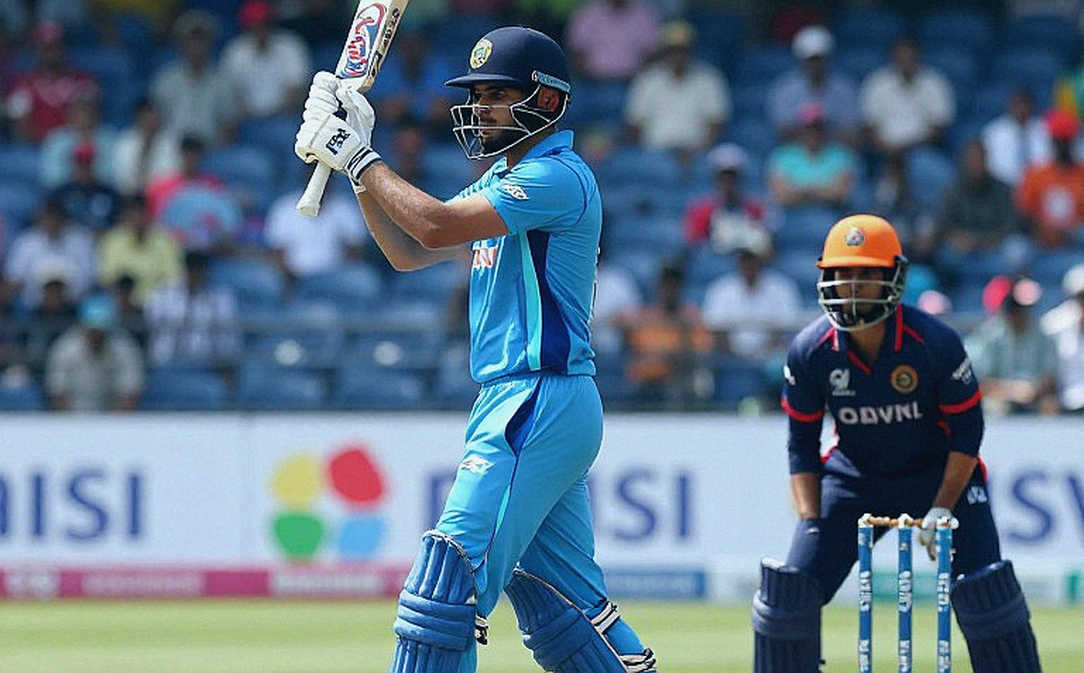
The most discussed structural point about this Indian side is that its top four — Shubman Gill, Rohit Sharma, Virat Kohli and Shreyas Iyer — are all right-handed. Captain Gill has indicated this is a deliberate choice rather than a compulsion.
In cricket strategy, left-right balance is considered valuable because it forces the bowler to alter line and length and the field to shift. An all-right-handed top order means New Zealand's swing and seam bowlers can bowl a consistent line, particularly in conditions where the ball is moving. That is a risk point in India's plan.
The counter is available. According to the captain, positions five and six are floating — not fixed. If conditions call for a left-hander, Axar Patel can be sent in. KL Rahul is also among the options, giving middle-order flexibility.
This is a situational-selection philosophy: the lower middle order is tuned to the match situation, the opposition attack and the state of the partnership. It is a legitimate, practical modern ODI approach, but it carries a cost — batters do not get a settled role, which can affect consistency of form.
Gill's captaincy and Rohit's presence: a transition phase
The least discussed but most important structural fact of this tour is that the ODI captaincy sits with Shubman Gill while Rohit Sharma is in the XI as a player. That signals a generational handover in India's white-ball setup.
Such changes are typically sensitive for dressing-room dynamics. With clear roles and open communication it can be a smooth handover; with ambiguity it can become a friction point. It does not show up directly on the field, but it can show up in performance.
Do not underrate New Zealand at home
This series is not a formality. New Zealand have historically been overperformers on their own soil — an underrated side that keeps competing. India have batting depth, but this analysis carries no firm information on the bowling combination or on condition-specific adaptation. Predicting the series outcome on that basis would be premature.
Why this becomes news: the commercial side
Technically this is an international bilateral series with no league, auction or trade involved, so its direct industry significance is limited. But Kohli-anchored content reliably drives high engagement in Indian digital media. That is why 'big record' language is chosen for click value rather than sporting significance. It is not a conspiracy; it is media economics — and readers deserve to know what they are reading.
The risk list
First, narrative over-inflation: presenting a narrow, location-scoped record as a 'big record'. If Kohli falls short of 139, the same coverage can pivot to 'form crisis', disproportionate to the actual event.
Second, the technical risk: an all-right-handed top four will be tested against New Zealand's swing and seam. It will be worth watching when and how the team activates its floating left-hander.
Third, the weather: rain and DLS in Auckland in November can change the shape of any match and make statistical comparison difficult.
Fourth, a lower-level but notable flag: the source's internal date inconsistency — the match is described in one place as 'Wednesday' and in another as 'November 4'. The date and day should be verified against the official schedule.
Fifth, workload and injury are simply absent from this report. That is the single biggest variable affecting senior players, and no data is available here. It should be logged as a watch item, not a conclusion.
What to watch
One: Kohli's cumulative New Zealand ODI runs. Crossing 653 breaks the record and takes the story to its peak.
Two: how India use positions five and six. If Axar Patel or KL Rahul are deployed situationally, the flexible model is validated.
Three: captaincy dynamics. Press conferences and on-field decisions will reveal whether the Gill-Rohit arrangement is smooth.
Four: rain and DLS intervention, which can distort both results and statistics.
Conclusion
The real attraction here is not the record itself, which is statistically modest. It lies in two overlays: first, a superstar-legacy storyline riding on a small-sample split; second, an Indian side in generational transition, with a deliberately homogeneous right-handed top order and a middle order built to adapt. Kohli is genuinely likely to reach 139, so the record falling would surprise nobody. But accurate reporting will call it 'most ODI runs by an Indian in New Zealand' — not an all-time achievement. Preserving that distinction is the most honest way to cover this story.
Disclaimer: This report is based on public information and available data. All statistics cited are ODI-only, New Zealand-soil splits and must not be conflated with Test, T20 or overall career figures. This content is for sports-information purposes only and does not constitute betting advice. Sporting outcomes are highly uncertain; treat analytical conclusions rationally.