
N/A Is Not a Story: How an Empty Cell in Cricket's Information Chain Becomes False Reassurance
**मुख्य उत्तर**: क्रिकेट विश्लेषण की दो-चरणीय सूचना-शृंखला में निष्कर्षण विफल होने पर भी खाका पूरा छप जाता है। शून्य सूचना-बिंदु वाली रिपोर्ट खाली नहीं, 'रिपोर्ट करने योग्य कुछ नहीं' पढ़ी जाती है; यह झूठा नकारात्मक है, क्योंकि अज्ञात जोखिम कम जोखिम से भिन्न है। **मुख्य तथ्य**: - रिपोर्ट में शीर्षक, स्रोत, सारांश और सूचना-बिंदु शून्य दर्ज थे; केवल डोमेन लेबल cricket_asia शेष रहा। - वर्गीकरण और निष्कर्षण अलग-अलग जुड़े घटक हैं; लेबल बचा, तथ्य नहीं, जिससे पाइपलाइन की विफलता का स्थान स्पष्ट होता है। - रिपोर्ट ने जोखिम-दर्जा देने से मना किया, क्योंकि 'कम जोखिम' लिखना झूठा नकारात्मक होता। - खाली निष्कर्षण और 'कुछ घटा नहीं' को अलग-अलग स्थिति-कोड के रूप में दर्ज करना आवश्यक है। - रणजी और WPL जैसे कम-कवरेज बीटों में कवरेज की अनुपस्थिति को घटना की अनुपस्थिति पढ़ लिया जाता है। **स्रोत**: Stage-2 क्रिकेट डोमेन विश्लेषण रिपोर्ट, डोमेन लेबल cricket_asia; प्रकाशन तिथि दस्तावेज़ में दर्ज नहीं। **संबंधित प्रश्नोत्तर**: प्रश्न: खाली सूचना-बिंदु वाली रिपोर्ट को खबर क्यों नहीं माना जाना चाहिए? उत्तर: क्योंकि उसमें कोई सत्यापन-योग्य तथ्य नहीं होता, और स्मृति से खाने भरना स्रोत-रहित कथा उत्पन्न करता है। प्रश्न: 'अज्ञात जोखिम' और 'कम जोखिम' में क्या अंतर है? उत्तर: अज्ञात का अर्थ है आकलन ही संभव नहीं, जबकि कम जोखिम एक निष्कर्ष है जिसके लिए साक्ष्य आवश्यक है। प्रश्न: इस विफलता का सबसे तेज़ समाधान क्या है? उत्तर: कच्चे स्रोत पर भिन्न निष्कर्षण के साथ पुनः प्रयास, और PARSE_FAILURE को NO_SIGNAL से अलग स्थिति-कोड के रूप में दर्ज करना।
In 2026 I counted 4,180 deliveries — Ranji Trophy knockouts and the Syed Mushtaq Ali Trophy, each ball frame-frozen, tagged for release point, seam angle and wrist position. The first byline that came out of that labour made a narrow claim: Kuldeep Yadav's chinaman was not a mystery, it was a measurable wrist-position problem. Two weeks later he debuted in Dharamsala and took 4/68 in the first innings. Whether that was coincidence is arguable. What was not coincidence was that every sentence in the piece had walked out of a spreadsheet. I do not write a line I cannot attach a delivery log to.
This week another document landed on the desk. Its title was blank. Its source was blank. Its one-sentence summary was blank. Author's stance unavailable, article purpose unavailable, and decisively — zero information points. Yet the document looked complete. Eight sections, a table in each, tidy rows of N/A, confident 'High confidence' tags scattered through the middle, a disclaimer at the end. Fifteen hundred words of map with no terrain on it.
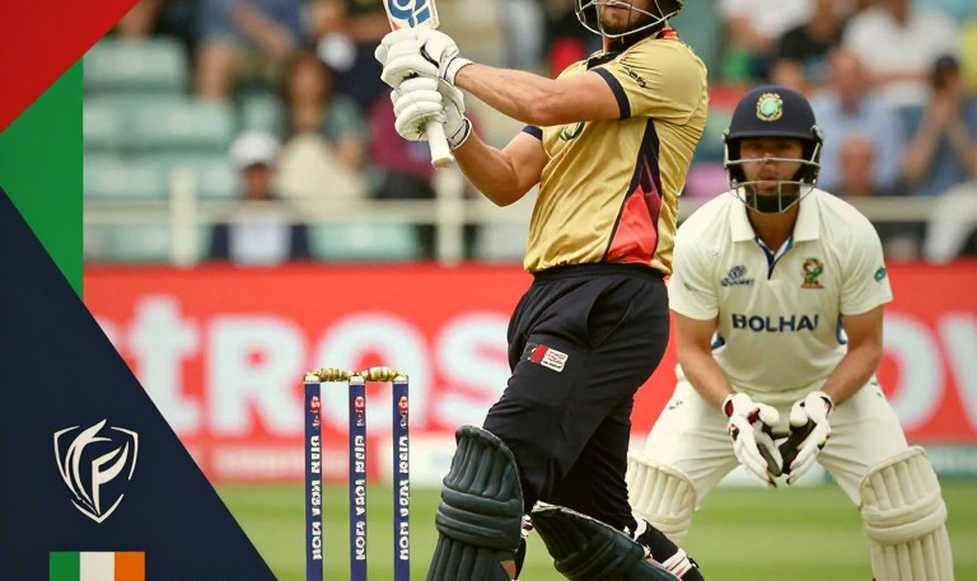
This is not a match story. It is a story about the machinery that makes match stories, and about the moment that machinery returns empty-handed while the document still goes to print.
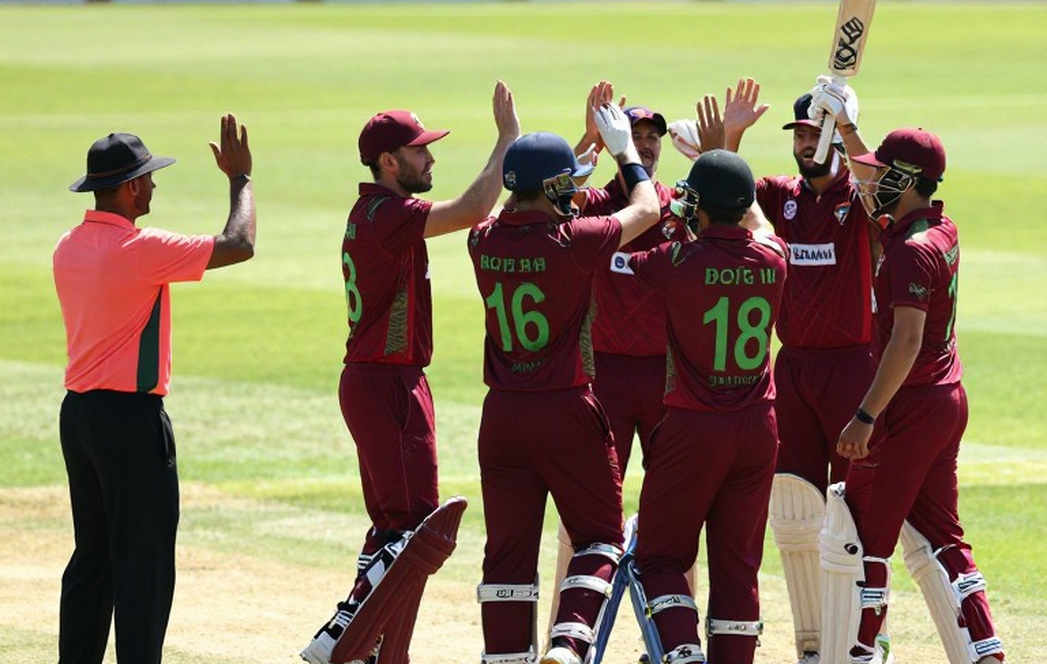
Cricket's information chain has two stages. The first is extraction — ball-by-ball logs, scorecards, field-placement sheets, broadcast timestamps, gate receipts, accreditation lists, retention lists, NRR tables. The second is argument — the interpretation built on that log. My entire trade sits on the gap between them. The press release is the last draft, not the first. An announcement is a hypothesis; it gets tested against the delivery log, the gate receipt, the broadcast sheet, the retention list, and the piece runs only when the two diverge.

I learned that in the Eden Gardens press box. April 2026, my first IPL credential, KKR against Rajasthan Royals. A senior columnist in the row behind asked me to fetch his coffee and told the box that the tactical stuff was above the ladies. I did not argue. I filed on the contrasting release points of Sunil Narine and Kuldeep Yadav, and counted out where KKR's ring field was pinching the singles — eleven annotated field-geometry screenshots. The desk ran it. A franchise analyst emailed within the week asking for the raw coordinates. That day I stopped writing match reports and started writing space maps.
But the document on my desk today is stage one, and it came back empty. The question is not why extraction broke; machines break. The question is why stage two still printed eight tables after it did.
First: classification survived, extraction died, and that is the root of the whole problem.
One thing in that report was intact — the domain label, cricket_asia. Everything under it was hollow. No team named. No player named. No venue named. One tag alive above a collapsed building. Technically this says something clean: the component that categorises and the component that extracts are decoupled. The label survived because its job was easy; the facts did not survive because they have to be pulled out of parsed text, and no text arrived.
Cricket shows this shape every day. The broadcaster's graphics package runs perfectly — scorebug, team logos, sponsor line, all in place. Behind it the ball-tracking feed is dead. The viewer sees a complete scorecard; the data desk knows not one coordinate from that evening was logged. cricket_asia is that scorebug.
And the tag is dangerous precisely because it offers half a context. Home-away profiles across the Asian bloc are so asymmetric that no tier judgement is possible without a venue. A 135 strike rate on a dry, slow turner is excellent for an anchor and poor for a finisher; on a flat death-overs ground it is average. Strip away venue, format and phase and every number loses its address. I followed the delivery log until it contradicted the press release — here there is no log to follow.
One rule falls out of this and applies to every spatial argument: one diagram, one plain sentence. Any spatial insight that a Hindi or Tamil commentary producer cannot say in a single line on air is not insight, it is a credential. All eight of that report's tables fail this test — they say nothing, so they translate nowhere.
Second: unknown risk and low risk are not the same thing, and Indian cricket coverage merges them daily.
The most honest sentence in that document was the one refusing to grade risk, noting that writing 'low risk' would be a false negative. That distinction is not only a data-science one. A Ranji group-stage round with no camera, no ball-by-ball feed and no byline registers the next morning as 'nothing happened.' Absence of coverage gets read as absence of event. The truth is that three batters changed, a quick bowler's action changed, and one side took the new ball with two spinners for the first time. Nobody knew is not the same as nothing occurred.
My own instinct needs watching here. Women's cricket is my chosen beat, the one desks code as low-status. In July 2026 the Women's World Cup final was at Lord's, India lost by nine runs, and nobody at the desk wanted the assignment. I took it. That match mattered as much as any men's tournament in Asian cricket, and the information machinery around it was a tenth the size. There was a scorecard. There was no story.
But there is a trap and I have to name it: absent coverage is not significance by itself. The proportionality test has to run. Does this change what a reader understands about the system, or does it merely fill a gap? If the latter, 400 words, not 2,000. Giving a routine Ranji fixture the word count of a World Cup final is the same error as skipping it.
The same arithmetic applies to the 2026 women's World Cup win. A trophy does not produce a generation on its own. It produces one when the WPL's broadcast promises are audited — how many matches free-to-air, how many in regional languages, how many at domestic grounds, how many women in the commentary box. A promise is a hypothesis. Until the broadcast sheet is set beside it, it is a scorebug.
Third: the fully rendered template is the most efficient camouflage there is, and cricket journalism runs on it.
The risk in that report was not that it was empty. The risk was that it looked full. Eight sections, a lattice of tables, bold subheads, legal language at the close. A reader who does not look inside the cells sees a finished analysis. This is the skeleton of cricket's milestone journalism: the template is built first — hundredth international fifty, five hundredth wicket, ten thousandth run — and then the template demands material. If material happens to exist, the template fills. If it doesn't, memory fills it.
Memory is the most fluent forger available. Any analyst with eighteen years of watching can write a confident, source-less, beautifully paced paragraph about any team, and it will always read better than an honest N/A. That is the real crisis. Fiction is more readable than fact, so filling the empty cell becomes professional pressure.
The pressure lands hardest on me with models. Building a model is my fastest reflex and my largest risk — mistaking the model for the match. Between August and November 2026, during the IPL behind closed doors in the UAE, I built the empty-stadium model. It did not predict noise; it predicted where the assumptions break. That was plainly its job. The day I wanted to publish its output as a finding, I had to print the error bars and the assumption list underneath it, and write the sentence about what the model does not predict before the one it does. I build models to find the moment the narrative stops fitting the data — not to become the narrative.
The same discipline applies to this document. Its error bar is its entire content: zero information points. Hiding that would be the failure.
Now the part I find most uncomfortable, and therefore the most necessary.
The easy conclusion is that the fault is in extraction — the parser broke, so everything came back empty. True, and insufficient. The real failure is that cricket's information economy has no kill switch. We audit broadcast rights, accreditation lists, retention sheets and NRR tables. We never audit the feed. That is why an empty extraction does not read as empty; it reads as 'nothing to report.' These are false negatives, and false negatives are more dangerous than false positives because no error is visible. An error message is loud and gets fixed. Silence is loud and stays.
But an inverted argument has to be built here, or the piece collapses into grievance. The inverse is this: that empty document is the most honest thing produced this week. It refused. It did not fill cells from memory. It did not write 'low risk.' It said plainly, everywhere, that it could not assess — and it listed what would be needed to assess. Cricket journalism almost never performs that discipline. Instead of 'we could not obtain,' we write 'sources indicate' and keep moving.
That defence has conditions, and they have to be printed. It holds only if such a document stays rare. If the next run also returns eight empty tables, this stops being discipline and becomes habit — and the empty cell turns into an excuse for not covering. There is one way to tell the difference: whether the next report has a single populated information point. If it does, this was a failure. If it does not, it is a system.
I also have to guard against my own reflex. When a press box snubs me, my first instinct is to print it — receipts, no adjectives. Same rule here: keep the receipt, drop the adjective. There is no one to be angry at in this story, only an empty stage and a filled-in template.
So what to check next cycle? One question. Whenever a scorecard looks complete, ask how many deliveries are recorded in it. If the answer is zero, what you are reading is not a match, it is a template. The best fix for that document is one more attempt on the raw source with a different extractor. The more important fix is to keep two states permanently separate in the code and in the copy — 'could not be read' and 'nothing happened.' The day cricket's information chain learns the difference, Ranji's empty grounds and the WPL's empty broadcast sheets will both come into view at once. Watch how many people are surprised.