
Asian CricketAsian Cricket's Two-Tier Economy: The Widening Gap Between the Top Five and the Emerging Nations
Asian Cricket's Two-Tier Economy: The Widening Gap Between the Top Five and the Emerging Nations
एशियाई क्रिकेट दो स्तरों में बँटा है: पाँच पूर्ण सदस्य (भारत, पाकिस्तान, श्रीलंका, बांग्लादेश, अफ़ग़ानिस्तान) और एसोसिएट देश (नेपाल, ओमान, यूएई, हांगकांग आदि)। अंतर एशियाई क्रिकेट परिषद (ACC) के टूर्नामेंट ढाँचे में है — एशिया कप मुख्यतः पूर्ण सदस्यों का है, जबकि एमर्जिंग टीम्स एशिया कप और ACC प्रीमियर कप एसोसिएट टीमों का मंच है। आईसीसी राजस्व वितरण में भारतीय बोर्ड का हिस्सा सबसे बड़ा (लगभग 38–39%) है और एसोसिएट देशों को मिलने वाली राशि बहुत कम। नेपाल ने 2018 में एकदिवसीय दर्जा पाया और टी20 विश्व कप खेला; अफ़ग़ानिस्तान 2017 में पूर्ण सदस्य बना। सुधार के चार रास्ते: रीजनल टियर में अधिक मैच, एसोसिएट के लिए न्यूनतम राजस्व हिस्सा, घरेलू और महिला संरचना में निवेश, और फ़्रैंचाइज़ी लीगों में स्थानीय खिलाड़ी कोटा।
The real map of Asian cricket is drawn not on the field but in boardrooms and broadcast-rights auctions. India, Pakistan, Sri Lanka, Bangladesh and Afghanistan — the five Full Members — control almost all of Asia's cricket revenue, audience and media rights. Below them sit the Associate nations: Nepal, Oman, the United Arab Emirates, Hong Kong, Malaysia and the Maldives, all locked in a permanent struggle for space in the international calendar and for money. That two-tier structure has produced a durable inequality which the tournaments of the Asian Cricket Council (ACC) only partly paper over.
The ACC calendar is split into three layers. At the top is the Asia Cup, essentially a Full Member competition and the one carrying real broadcast value. In the middle sit the Emerging Teams Asia Cup and the ACC Premier Cup, where Associate sides get their window. At the bottom are the regional qualifiers. The problem is arithmetic: the lower tier plays far fewer matches, and most of those are staged at venues with limited spectator capacity. An Associate team may play fewer competitive games in a calendar year than a Full Member plays in a single bilateral series.
The financial gap is the clearest cause. Under the ICC's current revenue distribution model, the Indian board's share is, by widely reported figures, the largest single allocation at roughly thirty-eight to thirty-nine per cent, followed by the other Full Members. What reaches the Associates is a fraction of that, and much of it is tied to performance conditions. The effect is felt at domestic level: central contracts, physios and coaching staff, dedicated Under-19 and women's budgets — all of these exist comfortably only where the money does.
Nepal is the sharpest illustration of the contradiction. Crowds in Kathmandu demonstrate the domestic game's popularity, and the national side has built a pathway to major stages including the T20 World Cup after gaining ODI status in 2026. But the gap between popularity and institutional capacity remains: a limited number of approved stadiums, monsoon disruption, and the absence of a stable domestic calendar. The launch of the Nepal Premier League is a step in the right direction, but one league does not carry a system.
The Gulf has taken a different route. The UAE and Oman have leveraged their economies and infrastructure to become international cricket's neutral venue of choice. The 2026 T20 World Cup was staged across the two countries, and franchise leagues such as ILT20 have created a professional marketplace in the region. But that model rests largely on expatriate audiences and overseas players, which slows the development of locally produced talent.
Afghanistan is the exception to the whole architecture. A team that emerged from refugee camps achieved Full Membership in 2026 and, powered by players such as Rashid Khan, established itself at the top table. Yet it is an exception, not a rule — and much of its success traces back to diaspora talent, experience gained in Pakistani domestic cricket and players' participation in franchise leagues.
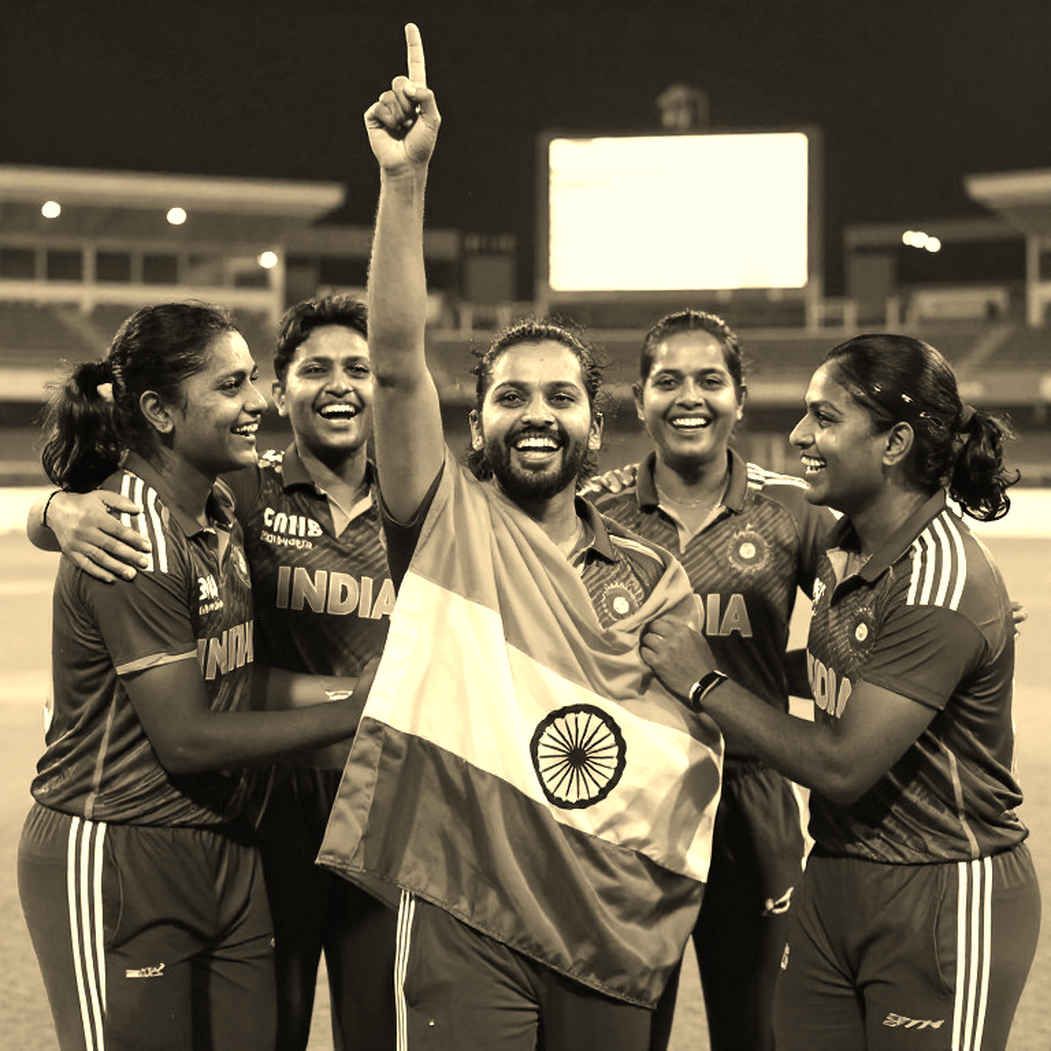
In women's cricket the inequality is starker still. India, Pakistan, Sri Lanka and Bangladesh have domestic structures, central contracts and media coverage. In Associate nations, women's teams frequently train without a permanent coach and without regular fixtures. The most useful thing for deepening the women's game in Asia is not new tournaments but more slots for Associate sides inside existing ones.
T20 leagues have redrawn Asian cricket's economic geography. The IPL, PSL, BPL, Lanka Premier League and ILT20 have opened new income streams for players and given smaller boards hosting opportunities. The flip side is that the international calendar is already congested, and Associate tours are routinely cancelled or postponed to accommodate league windows.
The qualification pathway institutionalises the imbalance. For the ODI World Cup, Associate teams must travel a long cycle through League 2 and the Challenge League, where every match carries points but where both the number of fixtures and a board's financial capacity are limited. One poor series can derail an entire four-year cycle, while larger boards have far more matches available for preparation.
The direction of reform is clear, even if the pace is slow. First, the ACC needs to expand the regional tier so that Associate teams play regularly rather than in two or three series a year. Second, revenue distribution should guarantee Associates a defined minimum share — performance-linked but not wholly conditional. Third, investment in domestic structure: Under-16 and Under-19 tournaments, separate women's budgets, coaching certification. Fourth, a local-player quota for Associates in franchise leagues, so that league money converts into local skill.
Asian cricket's strength is its market. Its weakness is that the market is concentrated in very few centres. The dominance of the five Full Members will hold as long as the tier below lacks enough opportunity to play — and opportunity to play is precisely what is scarcest today.
संबंधित खिलाड़ी
लोकप्रिय/पसंदीदा पुस्तकें
Zero Data in Cricket Analysis: Why Writing a Match Report Without Evidence Would Be Misleading2026-11-12
Empty Template, Open Field: The Asian Cricket Story That Contained No Story2026-11-12
Sylhet to Johannesburg: Five Days, One Addis Route, and the Deal Bangladesh Made in Silence2026-11-12
Pakistan-Sri Lanka Second Test Moved from Lahore to Rawalpindi as Smog Compresses Series2026-11-12
From Port Elizabeth to Cape Town: How Usman Khawaja's Revelation Reopens Australia's 2026 Ball-Tampering Scandal2026-11-12
The Column Every Cricket Report Leaves Blank2026-11-11
An Empty Brief, a Full Notebook: When Only a Label Reached the Cricket Desk2026-11-11
अनुशंसित
The Price of a Blank Sheet: In the Transfer Window, What Isn't Written Is the Loudest Lead2026-11-12
When Cricket Analysis Has No Evidence: Why Data Re-Extraction Matters More Than Invented Conclusions2026-11-09
Ace and Pace, Soaked in Eden Park Rain: Kohli's Frame and the Pacers' Tune Take New Zealand's Home2026-11-05
Asia Is Not a Format: The Checklist That Falls Out of a Blank Scorecard2026-11-11
IPL 2027 Retention Ledger: The 217-Name Board, the Deal That Never Happened, and the Most Expensive 'Patience'2026-11-05
Born in Belgium, trained in Australia, picked by Zimbabwe: Antum Naqvi's Test story is an eligibility file before it is a cricket match2026-11-05
The 7-10 Day Promise: Amit Mishra, Virat Kohli and Cricket's Unanswered Call2026-10-25
अनुशंसित
Delhi Pollution Forces India-Sri Lanka ODI Venue Change: Visakhapatnam to Host December 13 Match as BCCI Decision Raises Questions Over Player Safety and Cricket Governance2026-11-06
Two Clocks at Mirpur: West Indies' 64/0 Is Not the Story — Eight Extras and the Weather Are2026-11-01
The 7-10 Day Promise: Amit Mishra, Virat Kohli and Cricket's Unanswered Call2026-10-25
Ten Quotes, Zero Numbers: What the Virat Kohli Birthday Coverage Never Counted2026-11-05
Ishan Kishan Ruled Out of Second T20I, Kumar Kushagra Added as Cover2026-10-25
IPL 2027 Retention Ledger: The 217-Name Board, the Deal That Never Happened, and the Most Expensive 'Patience'2026-11-05
ICC ODI Rankings: Afghanistan 7th, England 8th — One Point, Two Tri-Series, and a Band That Decides Nothing2026-10-25
अनुशंसित
From Empty Data to Match Report: The Major Stage-1 Failure in Asian Cricket Analysis2026-11-05
A 37-Run Gap in Sharjah, but Afghanistan's Real Story Is 66/52026-10-28
After Edgbaston, Pakistan's New Door: Babar's Drought, Six New Faces and Sri Lanka's Quiet Challenge2026-11-09
Haris Rauf’s Fifth Demerit Point: The 46th-Over Flashpoint in Lahore and England’s Slow Over-Rate2026-10-29
Empty Source, Full Noise: Why 'Cannot Assess' Is Cricket Analysis's Most Honest Answer2026-11-08
Ishan Kishan Ruled Out of Second T20I, Kumar Kushagra Added as Cover2026-10-25
The Asia Cup's Real Ledger: One Fixture Sells, Everything Else Is Cost2026-10-28