
Shariful Tops the List, Tanjid and Taskin Join the 2-Crore Club; Pacers Rule the D Three Auction
बांग्लादेश क्रिकेट बोर्ड की 'डी थ्री ट्रॉफी' की पहली खिलाड़ी नीलामी में बाएं हाथ के तेज़ गेंदबाज़ शरीफुल इस्लाम सबसे महंगे खिलाड़ी रहे—2 करोड़ 30 लाख, सिटिज़न ग्रुप। तस्कीन अहमद (2 करोड़ 10 लाख, वॉल्टन) और तंजीद हसन (2 करोड़, फॉर्च्यून) अन्य प्रमुख नाम रहे। शीर्ष नौ कीमतों में चार तेज़ गेंदबाज़ हैं, जो बांग्लादेश में असली रफ्तार की कमी दर्शाता है। जाकेर अली अनिक (1 करोड़ 70 लाख) लिटन दास और कप्तान शांतो (दोनों 1 करोड़ 55 लाख) से महंगे बिके, यानी बाज़ार भूमिका (रोल) के आधार पर दाम तय कर रहा है, नाम के आधार पर नहीं। लीग में छह टीमें हैं—एक्मे, फॉर्च्यून, वॉल्टन, सेवन रिंग्स सीमेंट, सिटिज़न्स बैंक, ब्लू स्टार—और हर टीम को एक आइकन खिलाड़ी पहले से मिला है, जिनमें कोई भी शीर्ष कीमत वाला नहीं है। नीलामी 275 खिलाड़ियों की थी, यानी बड़ा हिस्सा बिना बिके रहेगा। सबसे अहम पेच: बोली 'पैसे' के बजाय 'अंकों' पर आधारित बताई गई है, लेकिन इकाइयाँ करोड़-लाख में पेश की गई हैं, जिससे असली भुगतान मॉडल स्पष्ट नहीं। लीग दिसंबर में टी20 से शुरू होगी; विदेशी खिलाड़ी, मैदान या प्रसारण साझेदार का कोई जिक्र नहीं। सभी आंकड़े एकल अनाम स्रोत से हैं और अपुष्ट हैं; किसी खिलाड़ी का औसत, स्ट्राइक रेट या इकॉनमी उपलब्ध नहीं, इसलिए कीमतों का सही-गलत आकलन डेटा के बजाय अनुमान है।
Dhaka: The player auction for the BCB's new domestic franchise league, the 'D Three' Trophy, was dominated by fast bowlers. Left-arm pacer Shariful Islam emerged as the most expensive buy at 2 crore 30 lakh, joining Citizen Group. Right-arm quick Taskin Ahmed went to Walton for 2 crore 10 lakh, while young opener Tanjid Hasan joined Fortune for 2 crore. A total of 275 players were put up for bidding out of an initial pool of 281. (Note: All figures in this report come from a single, unnamed source and have not been independently verified.)
The price ladder
After Shariful came Taskin, then Tanjid, followed by Hasan Mahmud and Saif Hassan (both 1 crore 95 lakh), Jaker Ali Anik (1 crore 70 lakh), Nazmul Hossain Shanto and Litton Kumar Das (both 1 crore 55 lakh) and Khaled Ahmed (1 crore 50 lakh). Hasan Mahmud went to Blue Star, Jaker Ali to Citizen Group, Shanto to Fortune, Litton to Walton and Khaled Ahmed to Seven Rings Cement.
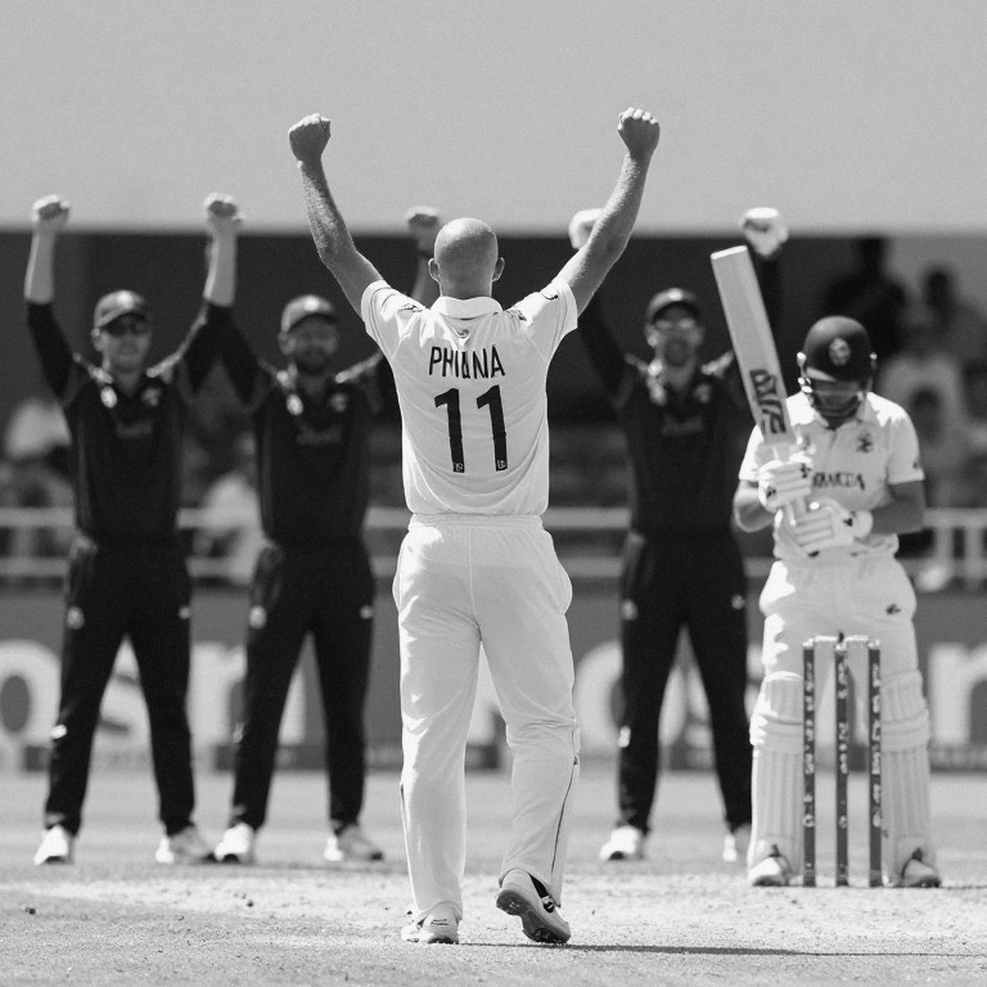
The clearest structural signal is that four of the top nine prices are fast bowlers — Shariful, Taskin, Hasan Mahmud and Khaled Ahmed. In a spin-dominant domestic ecosystem like Bangladesh's this looks unusual, but the logic is straightforward: genuine pace is the scarcest resource available. Left-arm pace is scarcer still, which makes Shariful's top price a natural market response. Taskin's ceiling justifies his fee, though his injury history is the discount that should theoretically apply — and no such discount is visible in the reported numbers.
A distinct wicketkeeper-finisher premium
Jaker Ali Anik's 1 crore 70 lakh bid was described in the report itself as 'somewhat unexpected'. That is the most important detail here. When observers reading the auction in conventional terms are surprised, it means franchise valuation has moved ahead of public perception. Jaker Ali out-earned Litton Das (1 crore 55 lakh) and captain Shanto (1 crore 55 lakh) despite a much shorter international career. The reason is simple: a wicketkeeper who can strike hard in the lower order is the most in-demand role in T20 cricket today. It is the domestic version of a global rule that puts a separate price on a keeper who can strike at 140-plus.
Shanto and Litton: a format discount
National captain Shanto stopped at 1 crore 55 lakh, which looks low for his status. This should be read not as a verdict on his ability but as a verdict on his T20 strike rate. Litton Das's case is similar — an established international opener was outbid by both a younger opener and a finisher. The market is sending a clear message that it is paying for T20 impact, not career reputation. The gap between Tanjid (2 crore) and Litton (1.55 crore) is the strongest evidence that franchises are modelling powerplay impact rather than career CVs. For Shanto there is an additional wrinkle: as captain, his status and his price do not match, which could create an optics problem inside the dressing room.
Icon players and the balance of six teams
The league has six franchises — Acme, Fortune, Walton, Seven Rings Cement, Citizens Bank and Blue Star. Each team was pre-assigned one icon player, guaranteeing every franchise at least one recognisable national face. Notably, none of the six icons features among the top auction prices. That suggests the icon mechanism was designed to guarantee marquee distribution rather than to reward the highest-valued players. As a result, the top of the price curve was deliberately suppressed — the true open-market value of a Mushfiqur or a Mehidy was never measured.
Mushfiqur Rahim's icon status is the best illustration. He has stepped away from Bangladesh's T20I setup, so his value here is brand and dressing-room gravity rather than T20 output. On the other hand, an auction pool of 275 players for six squads is a warning, not a depth signal — the overwhelming majority will go unsold. The pool is wide but the convertible elite is narrow; this reflects a low conversion rate rather than genuine depth. All six owners are established Bangladeshi corporate groups, which reduces payment-default risk but increases board influence over operations.
The catch in the points system
The most consequential detail of this auction is that it runs on points, not cash. According to the report, competition for players is based on points instead of money, and teams with more money do not get preferential access. That is an artificial balance mechanism designed to stop the auction becoming a victory for the richest owner. But there is a catch: the bidding units are still quoted in 'crore' and 'lakh'. When points are presented in the language of currency, the actual remuneration maths becomes blurred for players and viewers alike. The tournament's real financial model is not yet public.
The December window and the silence on overseas players
The league starts next December and opens with the T20 format. December is Bangladesh's least dew-affected month, which reduces the role of rain and DLS. The flip side is that surfaces may be slower and the ball may hold — meaning the heavy spend on pace may not always pay off on the field. Commercially the window is also awkward, because it collides with the BBL, SA20 and ILT20 calendars. Most importantly, the report mentions no overseas player, no venue and no broadcast partner. That suggests the auction was domestic-only for now, and overseas recruitment, if it happens at all, will be handled through a separate mechanism. The league's stated ambition is to start with T20 and add other formats later; if that happens, prices set on T20 logic will look increasingly misaligned.
Two marginal valuations
Saif Hassan's near-1.95 crore bid looks slightly rich. Local supply of established top-order batters is thin, and franchises are paying for availability rather than proven output. Similarly, Khaled Ahmed's 1.50 crore reflects pace scarcity; his profile is red-ball dominant and his T20 exposure limited. It looks like the auction's most likely panic purchase.
Risks and limitations
Three cautions are essential while reading this picture. First, this is a single auction on a single day — the sample size is one. Second, auction outcomes are heavily path-dependent, driven by bidding order, remaining budget and last-minute urgency, so no price should be treated as a precise measure of a player's ability. Third and most importantly, the report gives no averages, strike rates or economy rates for any player. Calling any price 'right' or 'wrong' would therefore rest on inference rather than data.
Conclusion
In short, the first D Three auction has sent a clear message: Bangladesh's domestic T20 market is now pricing players by role rather than by reputation. Pacers and finishers are expensive; conventional batters are cheap. Six corporate owners and a one-icon-each structure have laid the foundation for competitive balance, but the real arithmetic of broadcast rights, overseas players and points-based payment is still awaiting disclosure. The next big test comes on the field in December, when it will become clear how much of the money spent at the auction actually translates into cricket.